Exxaro Resources Limited
Integrated report for the year ended 31 December 2025


Exxaro stays ahead of the curve by proactively anticipating and managing risks across geopolitical shifts, regulatory change, technological disruption, climate pressures and market volatility. Our strong risk management capabilities give us the clarity, agility and insight to protect value, seize opportunities and deliver sustainable long-term value to our shareholders.
Objective
setting
Set Exxaro
strategy and
objectives
Establish the
context
Understand
the event, hazard
and
environment
Risk
identification
Name and
describe the risk
Risk analysis
Unpack drivers
(root causes) and
risk impact
Risk evaluation
Determine the
inherent, residual
and desired risk
score
Risk treatment
Implement
controls to
manage the risk
(corrective or
preventive)
Monitor and
review
Frequently
monitor and
review risks

Our cascading approach identifies risk events at the business’s strategic, tactical and operational layers.
The mining sector faces mounting pressures from logistics constraints, rail and port inefficiencies, coal price volatility, regulatory uncertainty and growing geopolitical uncertainty. Community unrest, energy instability and climate-related risks further heighten the complexity of the operating environment. In this context, strong risk management supports agile decisionmaking, strengthens resilience and positions the business to capture emerging opportunities.
We embed risk management into our daily activities and processes to enable informed decision making and proactive planning for potential internal and external events. Exxaro’s risk management philosophy positions risk management as a strategic enabler rather than a compliance exercise, ensuring we think and act proactively across all levels to support the achievement of our strategic objectives.
Our ERM framework provides a structured, integrated and forwardlooking approach to managing risk, with principles that underpin our philosophy, mission and vision. It is aligned with leading practices, including the Committee of Sponsoring Organizations, International Organization for Standardization (ISO) 31000 and King IV, and incorporates relevant standards such as ISO 9001, ISO 14001 and ISO 18001.
The ERM framework was reviewed and approved in December 2024 to ensure its continued relevance and effectiveness.
Emerging risks are monitored and reviewed as part of the risk process to ensure that new, evolving and uncertain threats or opportunities are identified early and incorporated into strategic decision making. Exxaro’s ERM process is a strategic initiative supported by the board and executive management. The finance director is responsible for enabling ERM across the group and reports to both the board and the RBR committee. The RBR committee regularly reviews the ERM framework to ensure alignment with current governance practices and standards. The board and executive committee monitor key risk indicators quarterly to ensure all risks remain within Exxaro’s approved risk appetite. The board is satisfied that the organisation has a mature, robust risk process that ensures risks with the potential to impact strategic objectives are effectively treated to safeguard and create stakeholder value.
Significant risks identified at the strategic layer are cascaded to the tactical and operational layers, while risks emerging from operational activities are elevated where necessary. This integrated approach ensures a comprehensive top-down and bottom-up view of risks across the organisation, strengthening alignment, visibility and responsiveness throughout the business.
Risk events
By applying clearly defined risk appetite and tolerance levels, Exxaro’s board and executive committee assess the level of risk the group may undertake to deliver on its strategy.
Extent and type of risk we are willing to endure to meet our strategic and capital allocation objectives
The maximum level of uncertainty/exposure we are prepared to accept
The risk appetite framework is updated annually or when deemed necessary as part of the strategic planning process.
Business continuity management (BCM) is a critical component of our risk management approach and a key treatment in strengthening organisational resilience and long-term sustainability. BCM enables us to anticipate, prepare for, respond to and recover from disruptions that may impact our operations, stakeholders and strategic objectives.
Our BCM framework is aligned to recognised standards and integrated into our broader ERM processes. This alignment ensures the organisation can continue critical activities within acceptable timeframes, thereby reducing the likelihood and impact of business interruptions.
As part of our responsibility to drive resilience across the group, we ensure that comprehensive response strategies are developed and maintained across the following core pillars:
These pillars collectively support our resilience objectives and enable a structured, coordinated and effective response to disruptive events. By embedding BCM into strategic and operational decision making, we enhance our ability to withstand shocks, protect value and ensure the sustainable continuity of our operations.
In addition to our strategic risks, we proactively monitor emerging risks and global trends that may influence our long-term strategic direction and value-creation objectives. These include evolving regulatory expectations, climate-related pressures, geopolitical and macro‑economic shifts, technological advancements and changes in stakeholder priorities. Continuous assessment and analysis of these developments deepen our understanding of their potential impacts on the business and enhance our ability to anticipate, prepare for and respond to future uncertainties. This forward‑looking approach strengthens the resilience of our risk management processes and ensures that Exxaro remains agile, competitive and well positioned in a rapidly changing operating environment.
We apply the ERM framework to identify and pursue opportunities. By contributing to the global energy transition, we are maximising value in the medium to long term and managing the risk of being unable to achieve growth objectives. We are adapting the coal and metals business to identify and pursue opportunities that create value and enhance our sustainability, such as investing in energy transition metals and renewable infrastructure.
The following opportunities inform our Sustainable Growth and Impact strategy:
| Opportunity | Strategic objective |
Strategic response | ||
| The drive for energy transition metals presents opportunities to invest in operational assets, project development and exploration by leveraging our balanced portfolio approach towards capital allocation and risk and returns management. |  |
 |
We continue to review and invest in opportunities that align with our strategy and investment criteria. | |
| Private-public participation in local rail operations is an opportunity for unlocking value and vertical integration. |  |
|
Amid rail infrastructure challenges in South Africa, we consider potential opportunities for private-public participation as a key strategic enabler. | |
| The multidimensional poverty index highlights the drivers of poverty and inequality in our communities, allowing us to focus our social impact efforts towards sustainable impact. We will prioritise education, land use management and SMME development. |  |
|
Social impact remains a key focus in our Sustainable Growth and Impact strategy, and we are committed to going beyond compliance to create positive social impact and sustained economic development beyond our operations. | |
| Our ability to maximise market-to-resource opportunities by leveraging the low cost and flexibility of our coal assets and reserves. | |
|
Our market-to-resource optimisation strategy remains a key enabler to maximise value from our coal assets. | |
| Accelerated expansion into renewable energy will support our low-carbon transition. |  |
|
We are committed to expanding our energy solutions business to become a leading energy solutions business. | |
| Nature-based solutions that mitigate the impacts of climate change present an opportunity, especially considering the vast amount of viable land that Exxaro owns. We intend to maximise this opportunity through our Sustainable Growth and Impact strategy. |  |
|
As a responsible mining company, we continuously evaluate opportunities to use our assets (including land) in support of a low-carbon future. | |
| We are leveraging the opportunity to invest in self-generation facilities, which aligns with our energy growth strategy. | |
|
Cennergi’s 68MW PV farm near Grootegeluk, commissioned in 2025, is our first self-generation project to expand and diversify within the energy space. The project supports low-carbon emissions and long-term savings on electricity usage at Grootegeluk. We are exploring further opportunities for selfgeneration. | |
| The global energy transition provides an opportunity to mine and supply the metals that support green technologies. Through a rigorous screening process, Exxaro identified future energy material and renewable infrastructure as being most aligned to our experience, capabilities and market forecast. | |
|
Future energy security remains a key consideration driving our diversification intent. We continue to review opportunities to expand our business through investments in the supply of energy transition metals. | |
| Technological advancements, especially in the field of AI and computing, can optimise our operations and unlock value by increasing productivity, reducing costs, improving safety and improving efficiencies. | |
|
We are actively investing in bolstering our data science capabilities as well as implementing advanced analytics and AI solutions across our business. | |
| While the energy transition is underway, coal remains vital to regional and international energy security and will remain crucial for some time. This provides an opportunity to extend the life of our current assets where feasible. | |
|
We are investigating the feasibility of life extension at all our operations and will do so responsibly. |
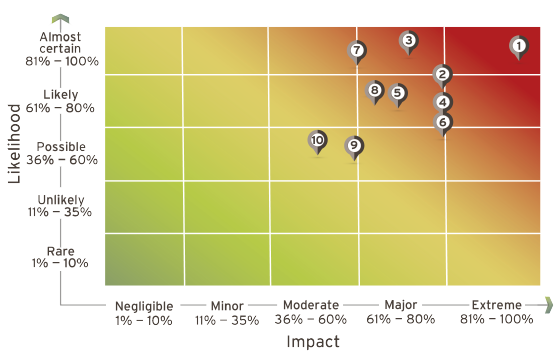
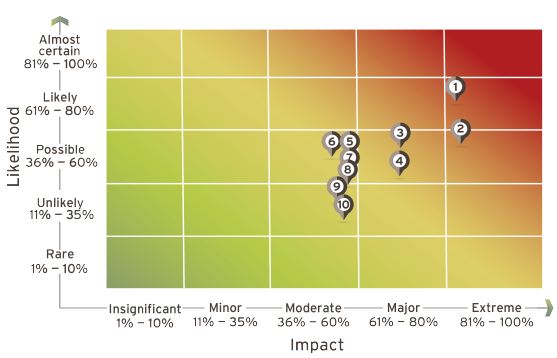
The table below illustrates changes in the residual risk score when comparing the 2025 financial year and forward-looking 2026 financial year. While we review risks quarterly, they may change significantly depending on their internal and external root causes. The 2026 ranking represents the key possible unwanted events that could impact our ability to achieve our strategic objectives. Risk scores are calculated from the product of the likelihood and the impact of the unwanted event (risk = f (likelihood of risk occurring x impact of the risk)).
| 2026 ranking |
2026 top risks | 2025 ranking |
2025 vs 2026 trend |
Comments |
1 |
Unavailability of logistics capacity (formerly unavailability of rail capacity) | 1 |  |
TFR operational and maintenance challenges are expected to continue, significantly impacting Exxaro. Since May 2025, TFR has experienced three major derailments year-to-date, contributing to ongoing rail disruptions. The North Corridor also continues to face recurring pantograph hook-up issues, further affecting train availability and reliability. Despite these challenges, the third quarter of FY2025 saw a positive recovery in weekly performance following the annual shutdown, with rail tempo peaking at 65.5Mtpa in August 2025 and averaging 55.8Mtpa for the quarter. Exxaro expressed interest in rail concessions between RBCT and Grootegeluk Complex through the Department of Transport’s private sector participation request for information and is preparing for the upcoming request for proposal. To support export plans, it has also initiated processes to secure services from independent train operating companies. |
2 |
Safety risk (formerly fatal risk incidents) | 2 | |
Exxaro recorded seven LTIs, with one being classified as an HPI related to trackless mobile machinery, one of our top fatal risks. These incidents occurred at Cennergi, Leeuwpan, Matla and FerroAlloys operations, causing fatal risks to remain high. All line managers were instructed to intensify visible felt leadership (VFL) to address this. The One Voice Safety strategy is being implemented across all business units through 19 weeks of activations, supported by zero tolerance rules and fatal risk protocols, to address priority unwanted events. |
3 |
Cybersecurity attacks impacting business | 3 | |
The information management team continuously implements security controls and assesses their effectiveness to ensure a robust cybersecurity programme. Key controls include policies and standards, vulnerability management, endpoint detection and response solution. Focus is on implementing further treatments, including the vault project and network access control system. These controls will be assured in 2026. |
4 |
Customer concentration risk | 5 |  |
Eskom’s financial position is a concern in the short to medium term as the government continues to reform South Africa’s electricity sector and Eskom implements its turnaround strategy and restructuring. Coal demand could be affected by changes in the energy mix. ArcelorMittal South Africa Limited (AMSA) continues to face a challenging operating environment, which is negatively affecting coal offtake. |
5 |
Country risk (formerly country risk (geopolitical)) | 4 |  |
Country risk remains elevated but trending positive off the back of encouraging improvements in state utilities, structural reforms, stable macro-economic management and increased momentum in public-private collaboration, which is beginning to translate into positive business sentiment. However, the positive sentiment is outpacing economic reality, as fixed investment continues to be low amid a challenging economy. Continued execution of reforms and infrastructure recovery remain critical to further risk reduction over 2026. Further, the outcomes of local government elections, planned for the fourth quarter of 2026, are a focus. They may present some surprises in key municipal centres and possibly result in limited social unrest. |
6 |
Adverse threat to licence to operate | 6 | |
We will continue to focus on delivering on our commitments in line with our licence to operate. Additional project management and technical and supply chain resources have been deployed to support the delivery of SLP commitments. Furthermore, the implementation of the Social Impact strategy is expected to deliver positive outcomes for the communities where we operate. Community members are kept updated through regular community engagements, and engagements with the Department of Mineral and Petroleum Resources (DMPR) are ongoing. The Matla mining right was approved. |
7 |
Climate change and decarbonisation challenges (formerly decarbonisation challenges) | 9 | |
Phase 2 of the carbon tax was implemented on 1 January 2026. Proposed changes will increase Exxaro’s carbon tax liabilities due to reductions in tax-free allowances. Our focus is on implementing the decarbonisation roadmap and energy-efficiency projects to reduce emissions. We also await a carbon budget allocation from the Department of Forestry, Fisheries and Environment. |
8 |
Community unrest/ disruptions (formerly community unrest) | 7 | |
With the local elections in 2026 and associated risks, we will continue to intensify community stakeholder engagements and deliver on the Social Impact strategy and SLP commitments. |
9 |
Geopolitical uncertainty | N/A |  |
The heightened geopolitical tensions have not resulted in direct operational or trading disruptions for Exxaro. The group’s supply chains and export corridors remain unaffected by sanctions or military activity, and its predominantly South African operating footprint provides a degree of insulation from global geopolitical shocks. Exposure remains concentrated in manganese exports, which are primarily sold into China, necessitating continued monitoring of trade policy and tariff developments. Overall risk remains manageable, with no immediate impact on operations or revenue streams. |
10 |
Financial targets not met | 10 | |
Export coal prices continue to decline, placing pressure on revenue, profitability and EBITDA targets. The inability to move contracted volumes, due to AMSA and Eskom offtake constraint, has further impacted sales performance. Lower commodity prices are expected to negatively affect financial targets for the period. In response, a cost optimisation initiative was implemented, targeting a 10% reduction in non-labour costs to partially offset the revenue shortfall and protect margins. A short-term upside in coal prices is expected following the Middle East conflict and its impact on energy prices. |
|
Ranking in the top 10 is higher compared to the previous year | |
Ranking in the top 10 remained unchanged compared to the previous year |
|
Ranking in the top 10 reduced compared to previous the year | |
New |
Exxaro’s top 10 risks are plotted on an inherent basis (before controls) and a residual basis (after controls) on the heat maps below. We considered internal and external risks, with mitigation strategies dependent on the severity of impact and likelihood of occurrence.
| Likelihood | Impact | ||
| 1% – 10% | Rare | Insignificant | |
| 11% – 35% | Unlikely | Minor | |
| 36% – 60% | Possible | Moderate | |
| 61% – 80% | Likely | Major | |
| 81% – 100% | Almost certain | Extreme |
Exxaro assesses a range of risk treatment strategies, including avoidance, reduction, sharing, acceptance, or transfer. In selecting the most suitable treatment option, we consider stakeholder expectations, organisational values and the most effective communication methods. Decisions to implement a specific treatment are guided by our defined risk tolerances, the expected influence on impact and likelihood ratings, and a cost-benefit evaluation. Once a treatment is applied, Exxaro establishes ongoing monitoring mechanisms to track its implementation and evaluate its effectiveness over time.
1 |
Management |
2 |
Specialist functions (eg risk and compliance) |
3 |
Internal audit |
4 |
External audit and regulators |
5 |
Governance structures (board and board sub-committees) |
|
Ranking in the top 10 is higher compared to the previous year |
|
Ranking in the top 10 reduced compared to previous the year |
| |
Ranking in the top 10 remained unchanged compared to the previous year |
|
New |
We unpack the top 10 risks, their main drivers, their potential impacts on Exxaro, controls, future treatments (where relevant) and outlook below.
TFR's current leadership is expected to bring stability. Engagement between Transnet and the industry has improved.
Policy and legislative reforms towards an open rail regime are encouraging, with a milestone reached through the division of TFR into two functions: infrastructure management and operations. This enables access to the rail network for private operators.
Exxaro maintains low tolerance for operational risks that could affect business performance.
Material theme

Capitals impacted

Strategic objectives impacted
Line of defence

Risk ranking trend
Exxaro recorded seven LTIs and three HPIs, primarily involving trackless mobile machinery and working at heights - two of our highest fatal risks. As a result, fatal risk exposure remains elevated. All line managers have been directed to intensify VFL and consistently reinforce the pillars of the One Voice Safety strategy in their engagements. Continued implementation of the One Voice Safety strategy across all BUs, supported by zero tolerance rules and fatal risk protocols, is essential to preventing priority unwanted events.
Exxaro has zero tolerance for risks that endanger lives.
Material theme

Capitals impacted

Strategic objectives impacted
Line of defence
Risk ranking trend
Ransomware, unauthorised access to information systems and the availability of critical platforms remain key risks to Exxaro's operations. As digital transformation accelerates and AI is increasingly embedded in daily operations, exposure to cyber threats continues to rise. This highlights the need for a resilient cybersecurity programme and risk management strategies that balance innovation with operational stability and the achievement of business objectives.
Exxaro has a low appetite for information security risks, mitigated by ensuring data privacy and maintaining strong governance over IT systems, in line with overall company goals and strategic objectives.
Material theme
Capitals impacted

Strategic objectives impacted
Line of defence
Risk ranking trend
AMSA has commenced the wind-down of its long steel business following the expiry of the IDC's due diligence period, with section 189 notices issued from 1 September 2025. The Newcastle blast furnace has been placed on care and maintenance. AMSA's coal demand has reduced significantly due to a challenging operating environment. The steel producer's outlook remains constrained and is highly reliant on broader structural changes within South Africa. Eskom continues to experience operational challenges at its power stations, which impacts coal offtake at Grootegeluk.
N/A
Material theme
Capitals impacted

Strategic objectives impacted
Line of defence

Risk ranking trend
* CSA signed in April 2026.
Country risk remains elevated but trending positive off the back of encouraging improvements in state utility, structural reforms, stable macro-economic management and increased momentum in public-private collaboration, which is beginning to translate into positive business sentiment. However, the positive sentiment is outpacing economic reality, as fixed investment continues to be low amid a challenged economy. Continued execution of reforms and infrastructure recovery remain critical for further risk reduction over 2026. Further, the outcomes of the local government elections planned for the first quarter of 2026 are a focus area. They may present surprises in key municipal centres and possibly result in limited social unrest.
Exxaro builds an ethical culture rooted in integrity, accountability and trust, ensuring transparency and fairness in all actions including dealing with fraud, bribery and corruption.
Material theme

Capitals impacted

Strategic objectives impacted

Line of defence

Risk ranking trend
We will continue to focus on delivering on our commitments in line with our licence to operate. Additional project management, technical and supply chain resources have been deployed to support the delivery of SLP commitments. Furthermore, the implementation of the Social Impact strategy is expected to deliver greater impact to the communities where we operate. Community members are kept updated through regular engagements, and engagements with DMPR are ongoing.
Exxaro safeguards its reputation by ensuring full compliance with laws and regulations, with zero tolerance for non-compliance.
Material theme

Capitals impacted

Strategic objectives impacted
Line of defence
Risk ranking trend
We continue to explore opportunities to lower carbon emissions in our operations and value chain, and contribute to an impactful transition.
Exxaro is committed to environmental laws and decarbonisation. We accept minimal environmental risks to achieve our goals.
Material theme

Capitals impacted

Strategic objectives impacted

Line of defence
Risk ranking trend
Critical infrastructure failures, specifically regarding the water and road networks in the Victor Khanye, eMalahleni and eMakhazeni municipalities, are driving community unrest. We anticipate these service delivery protests will escalate as the election period approaches, posing a direct risk to our local operations.
Exxaro avoids actions that could harm our brand or stakeholder trust.
Material theme

Capitals impacted

Strategic objectives impacted
Line of defence
Risk ranking trend
Global geopolitical risk is expected to remain elevated through 2026 as military conflicts intensify, geopolitical tensions continue to be unpredictable, and trade protectionism increases. Ongoing conflicts in Eastern Europe and the Middle East, together with tariff wars and sanctions, are likely to sustain volatility in global commodity markets, logistics costs, and impact investor sentiment. South Africa's geopolitical positioning and strained relations with certain Western partners may continue to create uncertainty around trade access and diplomatic alignment, particularly in an increasingly fragmented global environment.
N/A
Material theme
Capitals impacted

Strategic objectives impacted

Line of defence

Risk ranking trend
Exxaro’s financial performance will largely be influenced by the logistical performance and ability of Eskom to meet its contractual commitments, as well as the performance of our investment in SIOC. Coal prices are declining and the foreign exchange rate is strengthening.
Exxaro proactively manages financial risk emanating from business decisions to remain liquid and solvent and meet our debt covenants and financial targets.
Material theme
Capitals impacted
Strategic objectives impacted
Line of defence
Risk ranking trend