
Exxaro Resources Limited
Integrated report for the year ended 31 December 2025


Materiality considerations guide the focus of our reporting. We apply a double materiality lens to identify matters that significantly influence our ability to create and sustain value, not only for our business, but also for our stakeholders and the natural environment.
Our materiality approach is guided by impact materiality (our outward impact on society, communities and the environment) and financial materiality (matters that impact our ability to generate revenue and preserve stakeholder value over time). This approach reflects the combined guidance of the Integrated Reporting Framework and GRI.
We conduct a materiality review annually, taking into account the dynamic nature of our material matters. This allows us to reflect on matters that may evolve from being material from an impact perspective to being financially material.
The review process involves:
Our materiality review results in matters that inform our integrated and ESG report content. The information provided in this report focuses on issues that have a greater impact on Exxaro's ability to create value over time. Matters that have a higher impact on society, communities and the environment are discussed in detail in our ESG report.
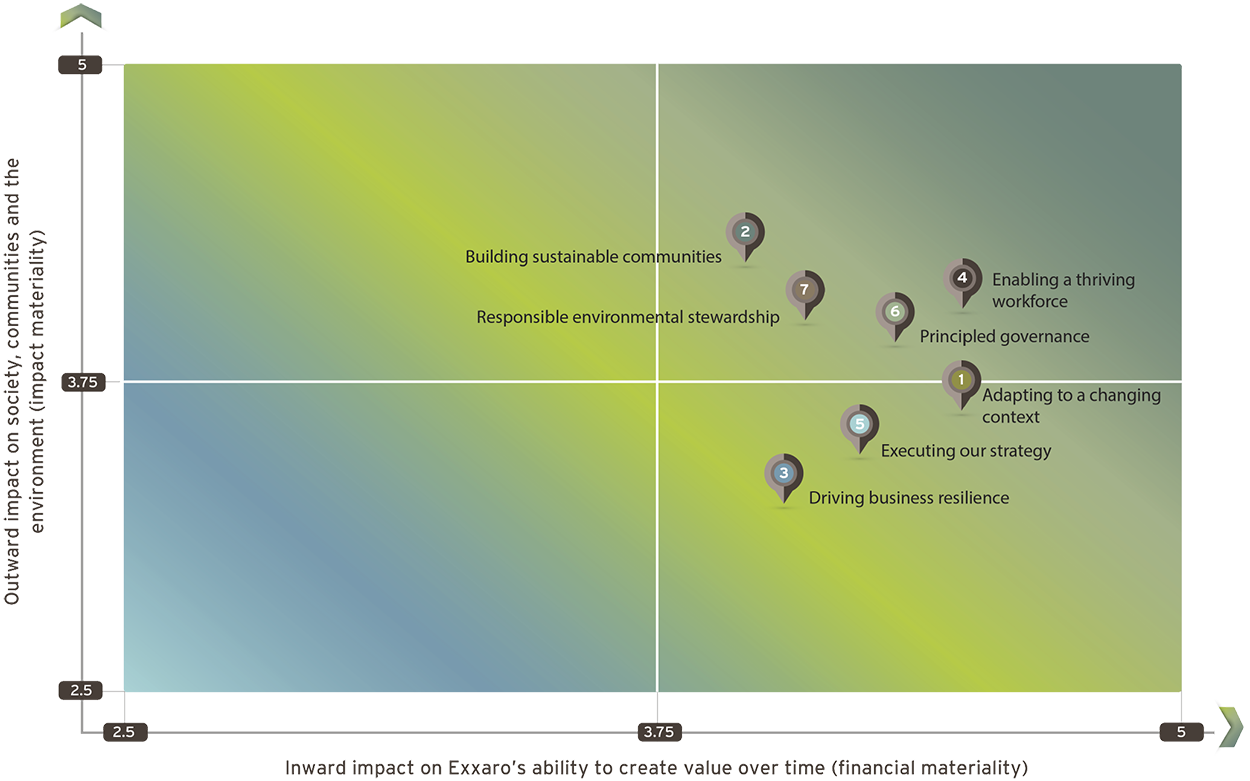
This year's materiality review resulted in 25 material matters across the same seven material themes. The matrix below depicts the prioritisation of our material themes, and our material matters are on the pages that follow, with changes indicated in footnotes.
We operate in a dynamic environment, shaped by social, political and economic issues. Globally, we are exposed to fluctuations in commodity prices, which impact the revenue generated from our resources. We are also affected by South African country risks, including policy uncertainty, inflation, stagnant economic growth, and infrastructure and service delivery challenges. To remain resilient, we must respond to these factors with agility while anticipating the future.
Theme
materiality
Capitals
SDGs
Strategic
response
Financially
material


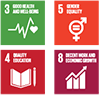
Maintaining our social licence to operate depends on the strength of our relationships with host communities. We aim to foster mutually beneficial relationships with our communities, and invest in community development and sustainable job creation. As we diversify our business and contribute to the transition to a low-carbon economy, we are committed to ensuring our communities' long‑term sustainability.
Social and relationship capital, Empowering our communities (ESG report)
Impact and
financially
material


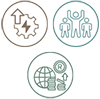
Business resilience supports the execution of our strategy. We reinforce our resilience through solid financial performance, supply chain management, effective capital allocation, responsiveness to logistical impediments, and private‑public partnerships. Our innovation mindset and adoption of emerging technologies mean that we increasingly face cybersecurity risks. Cybersecurity measures are essential to mitigate these risks and protect our data assets.
Financially
material

Upholding good governance, financial capital, intellectual capital, Driving supply chain sustainability (ESG report)
Our employees are central to our business, driving our strategy and enabling our performance. We ensure a safe working environment, promote health and wellness, and maintain labour relations based on open communication and respect. Employee attraction and retention are vital to our growth and sustainability. Developing employees' skills and creating an inclusive workplace empowers employees to grow and contribute to our business.
Human capital, Empowering people and communities (ESG report)
Impact and
financially
material

|
|
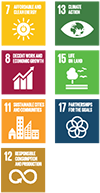
Climate change presents significant risks for organisations that do not adapt. Furthermore, the transition to a low-carbon economy brings opportunities for organisations to evolve their business models. Our response includes diversifying our assets, growing our energy solutions business and optimising our coal portfolio by disposing of non-core assets.
Our Sustainable Growth and Impact strategy, performance against our strategy
Financially
material

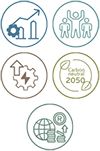
We uphold good corporate governance principles to build stakeholder trust, enhance our reputation as a responsible corporate citizen and boost our resilience in a changing environment.
Upholding good governance, Full governance report (ESG report)
Impact and
financially
material

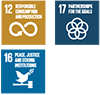
We are responsible stewards of the natural resources upon which our operations and communities rely. Not only do we aim to mitigate and manage our negative impact on natural resources, we also contribute to enhancing ecosystem resilience. Our goal is to ensure a sustainable future for our employees, communities and the planet.
Impact and
financially
material

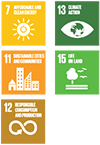
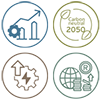
| ^ | Matter renamed or expanded. |