Exxaro Resources Limited
Environmental, social and governance report for the year ended 31 December 2025


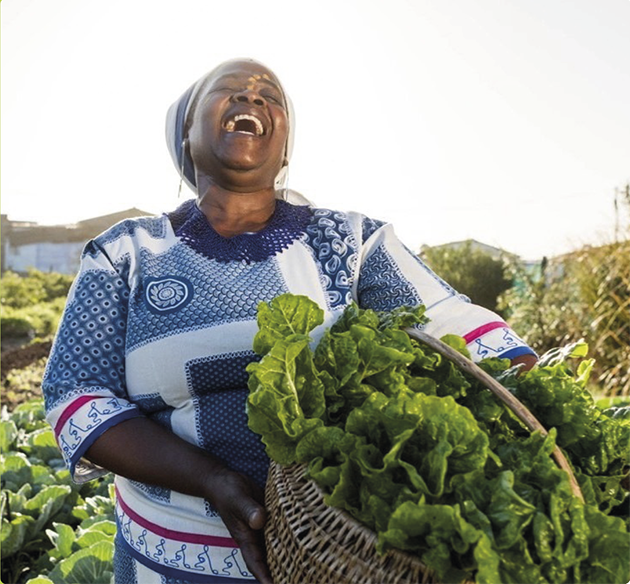
Strong, resilient host communities are essential to socio-economic stability, sustaining Exxaro's licence to operate and aligning with South Africa's national development goals. Communities and government expect meaningful action to address unemployment, education gaps and limited economic opportunities.
By investing in development programmes that build skills, strengthen education and improve access to essential infrastructure, we become a catalyst for economic growth and contribute to more inclusive, sustainable post-mining economies.
SERC, RBR and investment committees
Oversees delivery of the Social Impact strategy, monitors SLP and local economic development performance and escalates material issues to the executive committee
The executive head: sustainability ensures integration and execution of the Social Impact strategy across executive functions and chairs the monthly SLP project steering committee
BU managers and community development teams implement SLP and local economic development projects, track progress, resolve delivery challenges and report monthly into governance forums
We empower communities as part of delivering on our Social Impact strategy, which goes beyond statutory SLP and B-BBEE requirements to address long-term socio-economic challenges in our host communities. The strategy strengthens education systems, supports sustainable livelihoods and enables economic participation.
Key elements of our approach include:
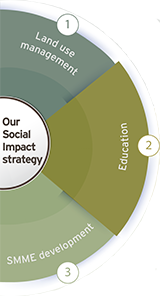
This strategy enables us to strengthen livelihoods during mining and support sustainable opportunities in the post-mining economy. This approach is complemented by discretionary expenditure and collaboration that enhance the reach, quality and coordination of development programmes. We aim to create lasting social impact that extends beyond regulatory requirements through the following three pillars:
|
Supporting black emerging farmers by providing access to land, resources and technical assistance needed to grow sustainable agricultural enterprises. Creating post-mining economies |
||||||
|
Strengthening early learning and improving whole school performance across our communities, enhancing physical, cognitive and social development. Education initiatives |
||||||
|
Supporting black-owned businesses and local economic inclusion by providing funding, skills development and training. ESD |
||||||
Our Social Impact strategy is implemented through:
Key principles
The value we deliver is supported by:
Strategic enablers
Our funding structures support compliance requirements and broader, value-adding community investments. The following mechanisms provide a stable and diversified funding base for socio-economic development projects across our mining and energy operations:
Funded through a self-sustainable loan fund aligned to 3% of Exxaro's NPAT as required by the B-BBEE codes, supporting black-owned suppliers (2% in Exxaro's supply chain) and enterprises (1% outside the supply chain). There is also grant funding to support micro and survivalist enterprises
Supported by 1% of NPAT as required by the B-BBEE codes, designated expenditure by the Exxaro Aga Setshaba NPC, funding discretionary projects, as well as donations to charitable organisations
Allocates 2.1% of windfarm revenue to socio-economic development (1.5%) upliftment and enterprise development (0.6%) projects within a 50km radius
Receives dividends from a 5% shareholding in Eyesizwe (30.81% Exxaro BEE shareholder). Funds are allocated to community development initiatives
Represents the 5% community shareholding in the Amakhala Project Company (2.5% each)
Annual funding supports youth by enabling them to complete schooling and develop skills for employment opportunities in sports and related fields
Emerging farmers gain access to rehabilitated or surplus mining land, enabling agricultural and commercial ventures
Local governments and SMMEs receive land packages for human settlements, agricultural projects and community infrastructure
Our inclusive approach enables Exxaro to design development programmes that reflect community priorities, address systemic challenges and deliver measurable impact. We build strong partnerships that strengthen SLP delivery and support shared value creation across our host communities.
We identify their needs, co-design projects and expand opportunities through local forums and proactive engagement
We comply with regulatory requirements and align SLP and social impact initiatives with DMPR, DoE, DoH, dtic, municipal IDPs and provincial development priorities
Collaborate on socio-economic development and unlock co-funding opportunities
We deliver social impact programmes such as education, skills development, agricultural and ESD with partners such as Cotlands, Citizen Leaderlab and SE Holdings
We facilitate knowledge exchange, influence policy and support coordinated sector-wide impact through the Minerals Council South Africa
| 2025 | 2024 | 2023 | |||
| Social investment projects for socio-economic development (SLPs and CSI) (excluding R10.52 million ESD programmes) |
R182.54 million | R161.79 million | R86.91 million | ||
| Combined investment by Exxaro and Cennergi in socio-economic and ESD programmes | R224.23 million | R187.29 million | R223.51 million | ||
| CSI (excluding ESD programmes) | R93.09 million | R117.87 million | R71.95 million | ||
| Number of community members benefited | 64 694 | 71 525 | 41 867 | ||
| SLP project investment (excluding R10.52 million ESD investment) | R90.92 million | R43.91 million | R14.96 million | ||
| Jobs created through SLPs | 139 | 51 | 29 | ||
| Cennergi's investment in socio-economic development initiatives, including education, welfare, agriculture development and health | R29.7 million | R27.9 million | R25.3 million |
Social investment projects in local economic development excluding ESD financial support and Cennergi (R182.54 million) (Rm)
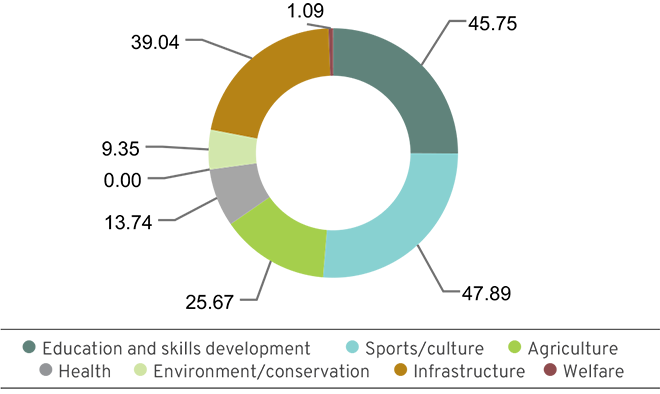
Investment structure spend to support social investment projects, including ESD and Cennergi (R194.53 million) (Rm)

We spent R101.44 million on SLPs
64 694 people benefited from SLPs
SLP projects that are still underway potentially benefiting 144 176 people
Multi-stakeholder partnerships
We strengthened our collaborative approach by forming new multi‑stakeholder partnerships to address systemic challenges:
Long-term learning support
We strengthen the sustainability of our education initiatives by improving the infrastructure that supports teaching and learning. To support our education Wi-Fi project, we expanded digital access across 46 schools and community sites. To enable educators to integrate digital tools into their lessons, 20 schools received mobile computer labs equipped with laptops and basic teaching technology.
To secure long-term connectivity, we engaged telecommunications providers to explore sustainable support models. These engagements did not deliver the commitments required because many providers have existing service-level agreements and we are assessing alternative options to maintain digital access for schools and communities.
Implementation of our current five-year SLPs continued across BUs, with several key projects in Lephalale, Matla and Belfast completed during the year. However, we experienced some delays in implementing SLPs, including municipal capacity constraints, long lead times for sourcing specialised equipment and limited local supplier capacity in technical skills and financial resilience.
Through targeted ESD funding and mentoring, we provided additional financial support to small enterprises to help them meet contractual obligations.
| Grootegeluk | ||||
| Completed | Nelsonskop Primary School hall and classrooms |
ECD centre | ESD programme | |
| We completed the handover of the new Martina Kekana school hall, four additional classrooms and external upgrades at Nelsonskop costing R23 million, recognising that overcrowding in Lephalale schools remains a challenge. The infrastructure unlocked community and district access to a multi-purpose hall with potential income generation for the school’s sustainability. |
The Lephalale fully fledged ECD hub of excellence was completed and handed over to Cotlands. This hub provides support to 44 ECD centres. The centre will ultimately be handed over to the DoE. |
The Lephalale ESD programme supports and strengthens local entrepreneurs’ capabilities. |
||
| 2025 spend | R1.03 million | R4.83 million | R8.63 million | |
| 2024 spend | R11.36 million | R0.72 million | R0.45 million | |
| Beneficiaries | 1 700 learners with 56 jobs created | 2 528 | 140 | |
| Grootegeluk | Thabametsi | |||||
| Projects underway |
Marapong sport, arts and culture precinct |
Marapong potable water pipeline |
Waste management | Sewer rehabilitation at Thabametsi’s Paarl sewer project |
||
|
The precinct and the Thusong skills development centre are on track for completion in 2026. Both projects will support community development through improved access to training and recreational facilities in Lephalale. |
Exxaro completed phase 1 of the project in 2021. The municipality is undertaking phase 2, which aims to deliver water to the Marapong Township. A new contractor will be appointed to ensure the project is completed in 2026. Continued to support the municipality with the engineering design services costs. | With development underway, we are integrating waste pickers into the formal system and creating SMME opportunities in recycling and related value chains in Lephalale. | As part of our 2020 to 2024 SLPs, we completed sustainable sanitation infrastructure to support improved health and hygiene for the surrounding community. The refurbishment of the Paarl sewer system improves sanitation and environmental management. | |||
| 2025 spend | R41.85 million | R0.28 million | R1.11 million | R18.87 million | ||
| 2024 spend | R12.39 million | R0.79 million | R2.4 million | R0.29 million | ||
| Beneficiaries | 36 227 (21 720 youth) | 30 745 | 26 228 | |||
| Belfast | Matla | |||||
| Completed | Road rehabilitation phase 2 | Road infrastructure and Thubelihle substation | ||||
| The project will improve mobility, safety and access for community members and local businesses |
We completed road infrastructure works, including the Ekungeneni road rehabilitation |
|||||
| 2025 spend | R5.36 million | R11.59 million | ||||
| 2024 spend | R4.87 million | R0.25 million | ||||
| Beneficiaries | 47 240 | 13 270 | ||||
| Leeuwpan | Matla | |||||
| Projects underway |
ESD programme | Leeuwpan borehole rehabilitation |
Matla Bonginhlanhla School phase 4 |
Cofimvaba sheep sheering | ||
| The programme provides targeted training to 15 SMMEs to strengthen their business capabilities and support local economic development. | In collaboration with the local municipality, this project aims to improve community water access. Exxaro procured and delivered the equipment. The municipality is responsible for installation to rehabilitate the borehole infrastructure. Completion was delayed to the first quarter of 2026. | Matla is supporting the construction of a new grade R classroom block that includes four classrooms, a centralised ablution facility, a dedicated playground, a gatehouse with a refuse area and a walkway. The project also involves the demolition and safe removal of an existing asbestos structure. The total cost of this project will be R19.27 million. |
The project will benefit the community of Xeni and surrounding villages of Cofimvaba in the Eastern Cape. Approximately 20 to 60 jobs will be created for the local community. A total of 10 000 sheep will be sheared during the shearing season. The planned completion date was delayed due to a number of developmental challenges. The project is expected to be completed at the end of 2026. |
|||
| 2025 spend | R1.89 million | R0.45 million | R2.71 million | R1.45 million | ||
| 2024 spend | R1.86 million | R0.77 million | R0.00 | R0.00 | ||
| Beneficiaries | 9 | 44 727 | 1 378 | 200 | ||
| Tshikondeni (mine in closure) | ||||
| Projects underway |
Irrigation | Improved access to water | ||
As part of our 2023 to 2027 SLP:
|
As part of our 2018 to 2022 SLP:
|
|||
| Accrued 2026 value |
R16.06 million | R27.89 million | ||
| Beneficiaries | 8 | 2 132 | ||
We have shifted our education and early learning support from once-off infrastructure interventions to programmes that strengthen the capabilities of practitioners, centres and learners. Through this approach, we aim to improve the quality and sustainability of early learning outcomes in our host communities. Changes we implemented include:
| Projects underway |
School infrastructure and resources |
Whole school development programmes |
ECD | Skills development | ||||
| We continued phase 4 of the construction of the grade R block at Bonginhlanhla School in eMalahleni. |
The programmes we support include:
|
Our ECD support focuses on practitioner training, assessment, registration of the centres and child development programmes. |
This investment targets research, development and university chairs. |
|||||
| 2025 spend | R2.71 million | R33.91 million | R14.30 million | R7.54 million | ||||
| 2024 spend | R11.36 million | R45.65 million | R25.02 million | R3.81 million | ||||
Our investment in ECD is a direct response to closing gaps that we identified across 199 ECD centres in Nkangala. These gaps include funding, infrastructure and practitioner capability that still affect the quality and sustainability of early learning provision. Our investment also supports the priorities set out in South Africa's 2030 ECD Strategy and the National Development Plan.
While implementation was initially planned for 2025, the programme will start in 2026 to allow for better alignment with operational priorities and resource planning. In 2026, the focus will be on ECD registration, infrastructure support and teacher development and training in Mpumalanga.
We supported 53 ECD centres across the Eastern Cape and Lephalale through early learning programmes and practitioner training in 2025. Our partnership with Cotlands in Lephalale provides comprehensive support to registered centres and strengthened early learning outcomes.
In 2025, 31 ECD practitioners (three in Lephalale and 28 at Cennergi) completed an accredited NQF level 4 qualification and 96 participated in relevant training programmes, expanding the reach of our capacity building efforts.
In 2025, we strengthened early learning outcomes by pairing our ECD programmes with essential health services through our visual and audiology programme. The programme provided screening and treatment for young learners to help identify conditions that may hinder classroom participation and learning.
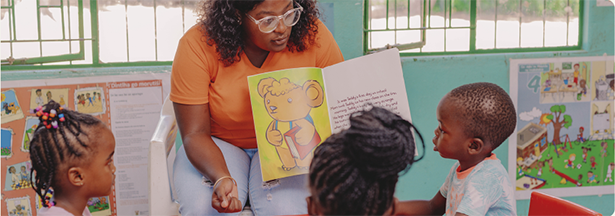
Vision support
We tested 1 413 children for vision and provided 58 learners with prescription glasses. Since 2019, we have tested 16 964 children and issued 445 glasses.
Audiology support
We tested 719 children for hearing, provided 16 hearing aids and performed ear wax removal for 38 children. Cumulatively, 1 383 children have been tested and 20 hearing aids issued.
Through this programme, we address health-related barriers that affect learning and support improved educational outcomes in our host communities.
We met the B-BBEE dtic requirement to invest 1% of NPAT in socio-economic development, supported by contributions from Exxaro Aga Setshaba NPC and discretionary donations. Exxaro Aga Setshaba NPC contributed R84.84 million (2024: R96 million) benefiting 56 769 community members (2024: 72 106). In education, the NPC spent R36 million (2024: R55 million) for academic camps, health and ECD support programmes. Aga Setshaba delivered the following high-impact initiatives through various partnerships:
| Completed | Academic camps | Health | Bursaries | Hope for the Blind | ||||
| We supported grade 12 learners to attend academic camps in Mpumalanga (Belfast, Leeuwpan and Delmas). | We partnered with Vision 4 Change to roll out eyetesting and audiology programme in KwaZulu‑Natal (Hlobane and Durnacol). |
Ruta Sechaba: In 2025, we awarded 12 grade 8 bursaries. Unfortunately, one learner lost their bursary due to academic performance. We thus have a total of 51 instead of 52 learners in grade 9 to 11. Edumap bridging programme: We supported 20 learners with bursaries to improve their grade 12 marks. |
Our donation helped procure vision impairment equipment and surgeries for people in Limpopo. | |||||
| 2025 spend | R2.05 million | R0.78 million | R9.3 million | R9.4 million | ||||
| Beneficiaries | 1 985 learners | 2 037 learners | 71 learners | |||||
| Completed | ECD support | Teacher stipends | Bursary support | Internet connectivity | |||
|
We funded monthly stipends for 10 school governing body teachers (2024: nine) and two information and communication technology tutors (2024: three) at Qhayiyalethu FET School, Paul Sauer High School, Kareedouw and Loerie Primary Schools in the Eastern Cape. | Through bursaries coordinated by Masinyusane, we supported 19 students (2024: 10). | In partnership with Herotel, we provided free internet for 654 AmaMfengu households (2024: 654 households) to access procurement platforms, SMME funding and other opportunities. | ||||
| 2025 spend | R1.9 million | R0.4 million | R2.1 million | R0.04 million | |||
| 2024 spend | R1.60 million | R0.92 million | R1.40 million | R0.04 million | |||
| Completed | Community hall renovations |
Grade 12 learner accommodation | Youth jobs and literacy programme |
Youth skills development programme |
|||
| Our renovation of Wittekleibos community hall created 10 temporary jobs (2024: 10) and empowered nine local SMMEs (2024: two). | We provided accommodation for 54 grade 12 learners (2024: 87) from Qhayiyalethu High School at Paul Sauer High School hostel and funded monthly stipends for nine school governing body teachers (2024: three). | We hired and trained 17 unemployed youth (2024: 17) to teach 277 learners (2024: 181) to read and write, in partnership with Masinyusane Development Organisation. | We trained 19 youth (2024: 10) in various skills such as millwright, chef, cattle farming, sewing, livestock, cabin crew, forklift operator, etc. | ||||
| 2025 spend | R0.4 million | R1.7 million | R0.1 million | R0.7 million | |||
| 2024 spend | R0.40 million | R1.50 million | R0.66 million | R0.54 million | |||
| Completed | NNT women poultry expansion |
Wittekleibos vegetable garden initiatives |
Training for women over 40 years old in cosmetic production |
SMME soap and detergent manufacturing training |
|||
| We funded the operational costs and construction of a second poultry house, enabling expansion from 1 620 to 4 000 egg layers. | These initiatives supported vegetable gardens through farm audits, market access and sourcing external funds in partnership with SE Holdings. | We supported training of 10 women in cosmetic and personal care manufacturing in partnership with The Hope Factory and Chemical Industries Education and Training Authority (CHIETA). | Through collaboration with the CHIETA and SAICA’s Hope Factory, we trained 10 local SMMEs (2024: 10) in soap and detergent manufacturing. | ||||
| 2025 spend | R2.2 million | R0.4 million | R0.6 million | R0.1 million | |||
| 2024 spend | R1.40 million | R0.89 million | R0 million | R0.73 million | |||
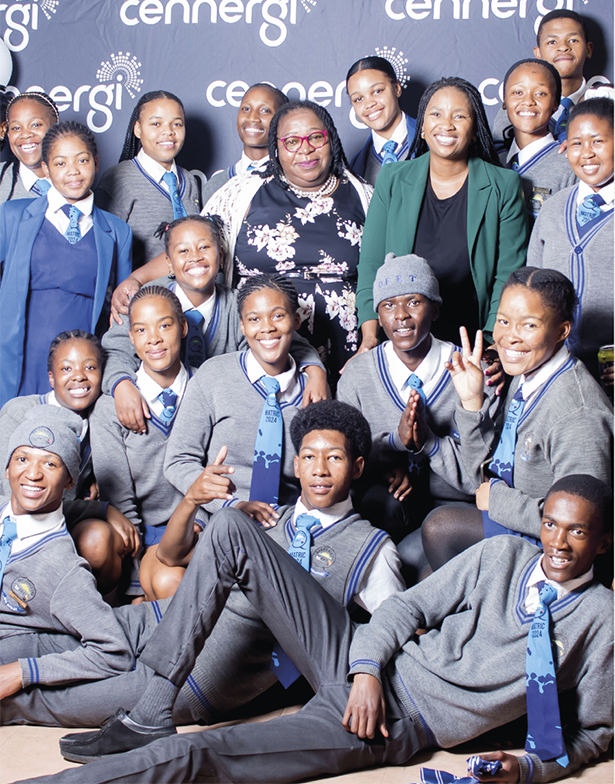
Qhayiyalethu FET, a no-fee quintile 3 high school in Kareedouw, serves learners from some of the most socio‑economically constrained communities in the Tsitsikamma region. Persistent challenges, including educator shortages, high employee turnover, overcrowded classrooms and limited subject offerings, put pressure on academic performance and learner retention.
Since adopting the school in 2017, the Tsitsikamma Community Windfarm Trust has provided targeted, long‑term support to strengthen education outcomes. Investments have focused on critical educator posts, learner development, infrastructure upgrades and grade 12 support, including accommodation at the nearby Paul Sauer High School hostel.
Between 2023 and 2025, R5.3 million was invested to stabilise the learning environment and improve access to quality teaching. This sustained intervention has driven a marked improvement in academic performance and learner progression.
Programme outcomes include:
Matric pass rates improved from 41% in 2023 to 65% in 2024, reaching 96% in 2025
Stabilised teaching capacity and expanded subject offerings, including maths and physical sciences
Improved access to grade 12 learner accommodation through hostel support
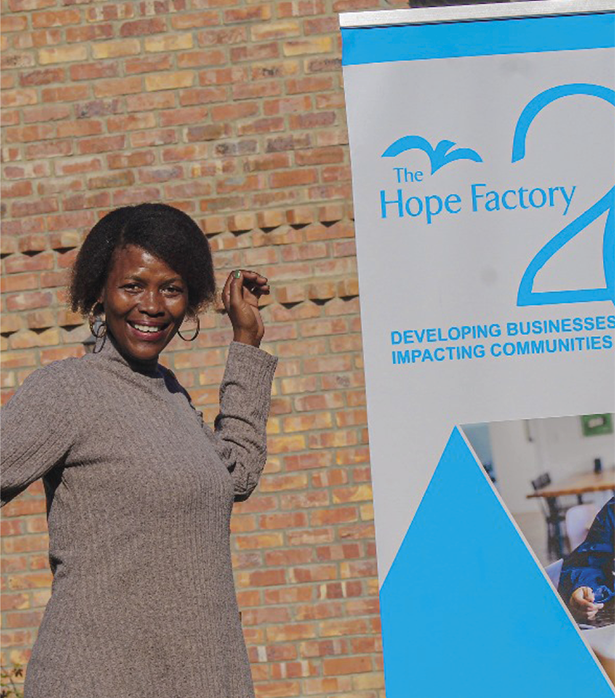
Through the Amakhala Emoyeni Community Fund Trust and CHIETA's Cosmetic and Personal Care Products Manufacturing Programme, Lindelwa Mboya progressed from trainee to business owner, establishing a small‑scale manufacturing enterprise supplying detergents and personal care products.
The programme provided targeted skills development, mentorship and business support, enabling Lindelwa to launch a compliant operation with SABS-tested products sold through multiple retail outlets. Lindelwa's enterprise has created employment for local youth and contributes to economic activity in a rural area with limited opportunities.
Beyond business growth, Lindelwa supports community initiatives and mentors aspiring entrepreneurs, showcasing how focused enterprise development can enable sustainable livelihoods and strengthen host communities.
Key highlights
Employing three local youth, supporting income generation in a rural community
Strengthening local enterprise development through skills transfer, mentorship and reinvestment in community initiatives
| Completed | Bursaries | Pilot training | School refurbishment | Teacher and admin stipends |
|||
| Bursaries supported 14 students (2024: 14) from Cookhouse, Bedford, Adelaide and Somerset East to acquire scarce skills at South African universities and TVET colleges. | We empowered Khazimla Gongqa to attend a two-year pilot training programme at the Madiba Bay School of Flight in Walmer, Gqeberha. | We refurbished ablution facilities at Witmos Primary School and installed a beta view fence at Visrivier Primary School, creating 17 jobs (2024: four), benefiting 264 learners (2024: 246). | Stipends supported 10 school governing body teachers (2024: one assistant teacher, two administrative clerks), creating 12 temporary jobs (2024: four) and benefiting over 1 600 learners (2024: over 1 000). | ||||
| 2025 spend | R1.3 million | R30 000 | R1.7 million | R0.5 million | |||
| 2024 spend | R2.70 million | R0.25 million | R0.46 million | R0.22 million | |||
| Completed | Youth literacy programme | ECD renovation | School vegetable gardens | Wheelchair support | |||
| The programme hired and trained 13 (2024: 10) previously unemployed youth to teach learners from Msobomvu Primary School and local ECD centres to read and write in partnership with Masinyusane. | We renovated Nyarha ECD centre in Bedford, creating six temporary jobs, benefiting one local SMME and 66 children. | We established vegetable gardens at four schools (2024: four), benefiting 1 961 learners (2024: 1 142). | We purchased wheelchairs for six beneficiaries (2024: 14) in Bedford, Cookhouse and Somerset East. | ||||
| 2025 spend | R0.5 million | R0.3 million | R0.3 million | R0.1 million | |||
| 2024 spend | R0.45 million | R0.22 million | R0.17 million | ||||
| Completed | Soup kitchen construction | Farmworkers’ house renovations | Cancer screening support | Victim support centres | |||
| We constructed a soup kitchen container for the Lixhase Women Cooperative benefiting 60 elderly beneficiaries (2024: 60). | We renovated four farmworkers’ houses at Alstonfield, Penderry and Varkenskuil farms, creating 38 jobs. | We supported mammogram screening for 138 women aged 40 and above across our four host communities to promote early breast cancer detection, led by Dr Unathi Sigqoza from Somerset East. | We supported the construction of plinths and rainwater tanks for Somerset East and Cookhouse victim support centres. | ||||
| 2025 spend | R30 000 | R2.8 million | R0.2 million | R0.3 million | |||
| 2024 spend | R0.27 million | R0.96 million | R2.10 million | ||||
| Completed | Livestock farm support | Soap and detergent training | SMME support | Cosmetic production training | |||
| Our support of Laphumikwezi livestock farm benefited 10 beneficiaries (2024: 10). | In collaboration with CHIETA, we trained 16 local SMMEs (2024: 16) from Adelaide, Bedford, Cookhouse and Somerset East in soap and detergent manufacturing by Chemin. | We supported seven catering, security, waste recycling and general trading SMMEs in partnership with SAICA Enterprise Development. | In collaboration with CHIETA and The Hope Factory, we trained 10 women older than 40 from Adelaide, Bedford, Cookhouse and Somerset East in cosmetic manufacturing. | ||||
| 2025 spend | R0.5 million | R0.3 million | R1.4 million | R0.4 million | |||
| 2024 spend | R0.69 million | R0.52 million | R0.71 million | ||||
| Completed | Ikamva-Lethu poultry project | Sakhubuntu vegetable farm | Oyingelosi Trading | ||||
| Eight farmers (2024: two) benefited from our support of Adelaide’s Ikamva-Lethu poultry project through farm audits, market access and external funding. Farmers also received extra grant funding of R0.4 million from Exxaro Aga Setshaba NPC to procure around 2 000 chicks. | We supported a farming project in Cookhouse, creating 36 temporary jobs and benefiting 100 people (2024: 100). The project also received an extra grant of R1.7 million from Exxaro Aga Setshaba NPC. | By assisting a small waste management service business in Cookhouse, we created eight permanent jobs. | |||||
| 2025 spend | R0.7 million | R0.7 million | R0.1 million | ||||
| 2024 spend | R0.21 million | R0.89 million | |||||

2026
key actions
In 2026, we will focus on ensuring that ECD centres are adequately resourced and that practitioners are equipped to deliver quality early learning. This includes: