Exxaro Resources Limited
Environmental, social and governance report for the year ended 31 December 2025


Mining operations are inherently high risk and unsafe practices can lead to injuries, fatalities, production losses, regulatory penalties and reputational harm. Our employees, regulators, communities and investors expect Exxaro to maintain a safe workplace anchored in leadership accountability, behavioural discipline and continuous improvement.
Safety is a critical element of our licence to operate that protects our people, operational resilience and long-term value creation.
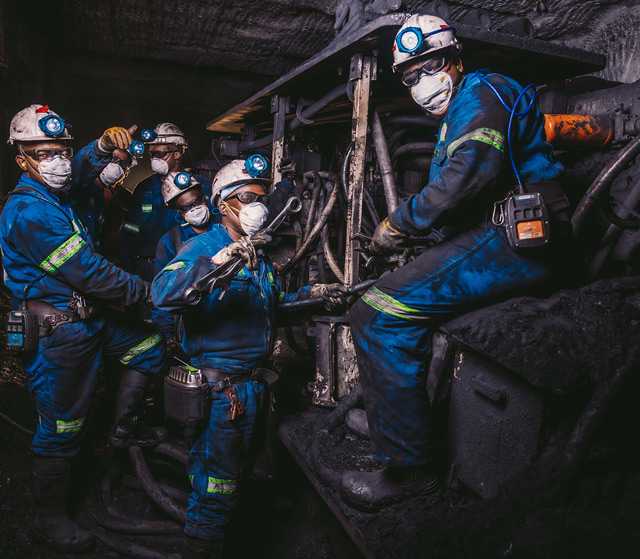
Exxaro’s safety management system translates our safety goal of zero harm across operations into practical standards and behaviours that protect employees and contractors. Guided by our One Voice Safety strategy, we integrate proactive risk management, structured processes, leadership-driven initiatives and technology to embed consistent, high-performance safety practices throughout Exxaro.
Key elements of our approach include:
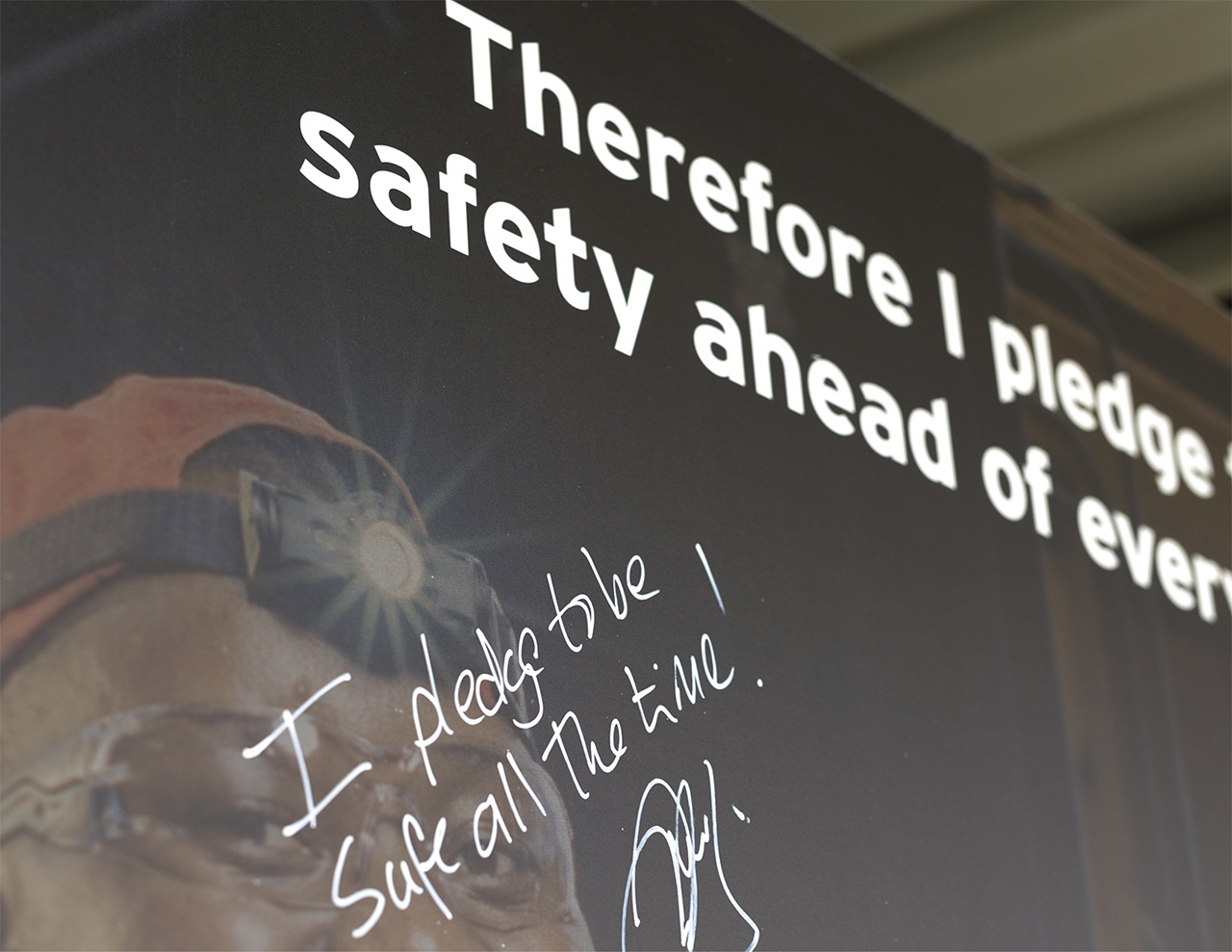
The CEO safety summit in April 2025 marked the launch of the One Voice Safety strategy, designed to unify how safety is communicated and practised across the business. The strategy simplifies messaging, aligns leadership engagement and embeds consistent safety behaviours at every site.
We rolled out the strategy through BU activations, toolbox talks and safety indabas, where employees explored the strategy’s pillars and behavioural expectations.
Read the case study on for details.
We also introduced zero-tolerance rules to define safe conduct and prohibit unsafe practices, alongside fatal risk protocols to manage the 10 most critical risks across operations. Together, these initiatives establish a shared safety language and strengthen collective accountability for zero harm.
Our fatal risk protocols and zero-tolerance rules address the most critical safety risks across our operations and define the mandatory standards, controls and behaviours required to prevent fatalities and high-potential incidents (HPIs).
The fatal risk protocols cover the 10 highest risks in our mining and energy operations, including ground and slope stability, transportation, machinery, electricity, fire, explosives and working at heights. The zero-tolerance rules complement these protocols by outlining the non-negotiable actions every employee must follow to ensure safe conduct in high-risk environments. We encourage our employees to exercise their right to stop work when conditions are unsafe.
Site management teams are accountable for verifying controls through high-risk task verifications, while our BU management teams investigate all incidents. An independently chaired grouplevel committee oversees the investigation of any fatalities or high‑potential incidents to ensure impartiality and accountability.
We review our safety improvement plans and targets annually to assess the relevance and effectiveness of our safety programmes and controls. We also embed lessons from incident investigations across operations to strengthen prevention and ensure continuous improvement.
We align our safety practices with internationally recognised safety management standards. Grootegeluk, Matla and Leeuwpan maintained ISO 45001 certification, and Belfast proudly achieved ISO certification in 2025.
We drive accountability through leadership-led engagements, transparent communication and ongoing recognition of safety excellence across BUs.
Our annual CEO safety summit focuses on critical safety, wellness and mental health issues, empowering employees and leaders to collaborate on practical solutions that strengthen operational safety. Frontline teams participate in panel discussions that address key safety challenges and promote shared ownership of performance outcomes.
Leadership safety days further reinforce leadership’s commitment to zero harm by creating space for open, critical safety conversations through field engagements. These engagements help align management priorities with workforce realities and build trust through direct, on-site interaction.
We strengthen leadership capability through targeted training programmes that cover risk management, legal liability and leadership in safety. These initiatives equip leaders with the competence and confidence to guide behaviour and embed a zeroharm mindset across all operations.
Awareness, communication and training We promote safety awareness through ongoing dialogue and training, targeted campaigns and transparent communication across all operations. Our goal is to embed a common safety language that guides behaviour and decision making at every level.
Group-wide initiatives such as safety stand downs, toolbox talks, BU safety indabas and mass meetings help us share lessons from incidents, reinforce consistent safety messages and drive accountability. We integrate safety themes into toolbox talks and site briefings to translate learnings into practical improvements.
We build safety competence through structured training and ongoing development, ensuring that all employees and contractors are authorised and declared competent before starting work. Training covers core risk areas and includes on-the-job and induction training, line supervisor safety management, safety representative training and mini-hazard identification and risk assessment (HIRA) courses.
Safety campaigns throughout the year encourage employees to take responsibility for their own safety and that of their colleagues, promoting proactive intervention when unsafe practices are observed.
We use bespoke apps to improve safety awareness. Employees can easily identify hazards and report unsafe behaviours, conditions and potential risks using our near miss reporting app and mini- HIRA tools. Management engages with employees in the field and captures their VFLs using the app, which helps the organisation analyse leading indicators.
The integration of digital tools streamlines access to safety processes and procedures, supports consistent implementation of safety standards and fosters behavioural accountability across all BUs.
We collaborate with industry partners, regulators and organised labour to promote shared learning, strengthen compliance and drive collective action towards zero harm. These partnerships enable knowledge exchange, benchmarking and consistent safety standards across the mining industry. Key collaborations and engagements include:
Minerals Council South Africa
Participating in initiatives such as Khumbul’ekhaya, which promotes CEO‑led safety leadership and industry-wide efforts to reduce fatalities
Mining Industry Occupational Safety and Health
Implementation of leading practices in key risk areas including falls of ground, transport and machinery safety
MHSA
Aligning with national safety milestones and ongoing contributions to industry safety forums
Government and regulators
Engaging with national and provincial government departments, local municipalities and regulators to support compliance, incident reporting and joint safety campaigns
Contractors and business
Collaborating to align expectations, strengthen incident prevention measures and embed shared accountability for safety performance
| Exxaro |  |
||||||||
| Target | 2025 | 2024 | 2023 | 2025 | 2024 | 2023 | |||
| Fatalities | 0 | 0 | 0 | 0 | 0 | 0 | 0 | ||
| HPIs | 3 | 1 | 4 | 1 | 0 | 0 | |||
| LTIs | 7 | 10 | 11 | 1 | 0 | 0 | |||
| LTIFR | 0.05 | 0.04 | 0.06 | 0.07 | |||||
Exxaro maintained strong safety performance in 2025, achieving an LTIFR of 0.04, which was below the annual limit of 0.05 and an improvement on the 2024 rate of 0.06. We recorded seven LTIs and three HPIs (2024: 10 and one respectively). The HPIs occurred at Matla mine and were linked to trackless mobile machinery and working at heights, and at the LSP, where a heavy-duty vehicle tipped over.
Inspectors issued one section 54(1)(b) stoppage during the year (2024: zero stoppages).

2026
key actions
Our focus for 2026 is to deepen the socialisation of the One Voice Safety strategy across all operations and contractor networks. This includes:
The roll-out of the One Voice Safety strategy brought Exxaro’s safety vision to life across Matla, Leeuwpan, Grootegeluk, Belfast and our mines in closure in KwaZulu-Natal.
Each safety indaba created space for reflection, dialogue and shared accountability, strengthening alignment between employees, leadership, unions and stakeholders around the goal of zero harm.
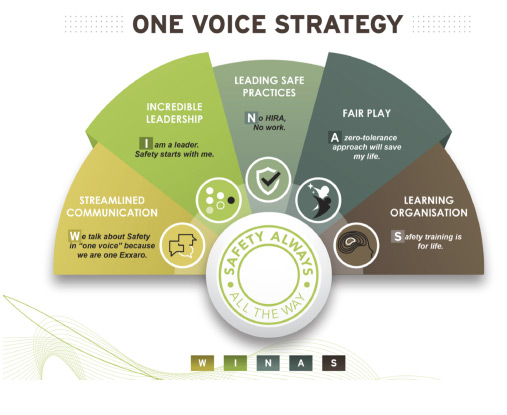
The strategy’s WINAS pillars translate the One Voice priorities into practical behaviours that define how safety is lived across the organisation:
One Voice strategy
Streamlined communication
W
Key takeaway
We talk about safety in one voice because we are One Exxaro
Incredible leadership
I
I am a leader. Safety starts with me
Leading safe practices
N
Fair play
A
A zero-tolerance approach will save my life
Learning organisation
S
Safety training is for life
Each pillar represents a simple, memorable commitment that reinforces Exxaro’s culture of care, accountability and vigilance. The indabas demonstrated that safety is not about compliance. It is a shared value that connects every employee through consistent actions and a collective responsibility to ensure that every colleague returns home safely, every day.
One Voice. One Exxaro. Safety Always, All the Way.