Exxaro Resources Limited
Environmental, social and governance report for the year ended 31 December 2025


ESG performance is a key indicator of a company's management, sustainability and risk profile. Stakeholders use it to guide investment and lending decisions, assessing Exxaro's ESG risk exposure and management relative to peers.
Our ESG KPIs reflect our ongoing drive to operate responsibly and measure how effectively we are progressing against our strategic ambitions and sustainability commitments. These indicators are shaped by our integrated ERM framework, which highlights the issues most critical to our business. Oversight remains strong, with the board and executive committee reviewing performance quarterly to ensure we stay on course and deliver meaningful outcomes.
To maintain the credibility of our disclosures, selected KPIs undergo independent assurance through our combined assurance process. This strengthens the reliability of our reporting and supports transparent disclosure of the value we create, protect or diminish across our six capitals and key performance areas.

| Carbon intensity (scope 1 tCO2e/total kilotonnes mined (kTTM)) | Carbon intensity (scope 2 tCO2e/ kTTM) | Water intensity (kL/tonne run of mine (RoM)) | Physical rehabilitation (actual versus budget) | Reportable environmental incidents | |||
| Target | Actual for previous year less 0.25% | Actual for previous year less 0.25% | 0.15 to 0.18kL/tonne RoM | 0% deviation from budget | 0 level 2 | ||
| 0 level 3 | |||||||
| 2025 | 10% increase | 17% increase | 0.145kL/tonne RoMRA | 5% deviation from budget | 0 level 2sRA | ||
| 0 level 3sRA | |||||||
| 2024 | 3.4% increase | 10.8% reduction | 0.142kL/tonne RoM | 0% deviation from budget | 0 level 2 | ||
| 0 level 3 | |||||||
| 2023 | > 5% reduction | > 5% reduction | 0.105kL/tonne RoM | Between 0% to 25% deviation from budget | 1 level 2 | ||
| 0 level 3 | |||||||
| Aligned to our Sustainable Growth and Impact strategic objectives | |||||||
 |
 |
||||||


| Number of fatalities | LTIFR* | LTIs* | Occupational health diseases | OHIFR* reported | |||
| Limit | 0 | 0.05 | 7 | 0 | 0.13 | ||
| 2025 | 0 RA | 0.04RA | 7 RA | 40RA | 0.22RA | ||
| 2024 | 0 | 0.06 | 10 | 23 | 0.14 | ||
| 2023 | 0 | 0.07 | 11 | 23 | 0.15 | ||
| Aligned to our Sustainable Growth and Impact strategic objectives | |||||||
 |
|||||||
RA Reasonable assurance provided.
* Lost-time injury frequency rate (LTIFR), lost-time injuries (LTIs) and occupational health incident frequency rate (OHIFR).
| Employees who received HIV awareness | Employees who were counselled and voluntarily tested for HIV | HIV prevalence rate compared to country prevalence rate | |||||
| Target | 95% | 95% | Less than the country prevalence rate | ||||
| 2025 | 98% | 97% | 1% compared to 12% less than the country prevalence rate | ||||
| 2024 | 99.12% | 94.3% | 1% vs 12% less than the country prevalence rate | ||||
| 2023 | 92.92% | 69% | 1% to 10% less than the country prevalence rate | ||||
| Aligned to our Sustainable Growth and Impact strategic objectives | |||||||
|
|||||||
| Black ownership at group level | B-BBEE level | People with disability representation | |||||||
| Target | 30% | Level 3 | 1.50% | ||||||
| 2025 | 47.10% | Level 2 | 1.70% | ||||||
| 2024 | 47.10% | Level 2 | 1.69% | ||||||
| 2023 | 47.10% | Level 2 | 1.69% | ||||||
| Aligned to our Sustainable Growth and Impact strategic objectives | |||||||||
|
|
||||||||
| Top management |
Senior management |
Middle management |
Junior management |
|||||||
| Historically disadvantaged person (HDP) representation | ||||||||||
| Target | 50% | 60% | 60% | 70% | ||||||
| 2025 | 25% | 79% | 87.6% | 85.6% | ||||||
| 2024 | 50.00% | 73.65% | 77.46% | 79.06% | ||||||
| 2023 | 50.00% | 73.33% | 83.44% | 82.31% | ||||||
| Women representation | ||||||||||
| Target | 20% | 25% | 25% | 30% | ||||||
| 2025 | 25% | 37.9% | 47.8% | 36.3% | ||||||
| 2024 | 25.00% | 36.26% | 45.64% | 35.42% | ||||||
| 2023 | 25.00% | 30.67% | 45.31% | 34.03% | Aligned to our Sustainable Growth and Impact strategic objectives | |||||
|
||||||||||
| Skills provision
(% of appointment of employees within) |
Scarcity skills
retention
(% turnover) |
Skills development expenditure* | Human resources development spend as % of payroll – Mining Charter III | |||||
| Target | 60% | 5% | 3.1% | 5% | ||||
| 2025 | 81.70RA | 3.71RA | 5.82% | 5.31% | ||||
| 2024** | 72.8% | 3.6% | 3.5% | 5% | ||||
| 2023 | 73.66% | 4.5% | 3.16% | 5.04% | ||||
| Aligned to our Sustainable Growth and Impacts strategic objectives | ||||||||
|
||||||||
| RA | Reasonable assurance provided. |
| * | On learning programmes in the learning programme matrix for black people as a percentage of leviable amount – B-BBEE. |
| ** | The operational effectiveness process completed in 2024 resulted in the decrease compared to the 2023 statistics. |
| Enterprise development | Supplier development | Socio-economic development | Time variance from plan | Cost variance from plan | |||||||
| % of net profit after tax (NPAT) | Project delivery measure – local economic development projects per SLP | ||||||||||
| Target | 1% | 2% | 1% | Within 10% deviation | Within 10% deviation | ||||||
| 2025 | 1.00% | 1.15% | 1.00% | 12% behind schedule | 2% under budget | ||||||
| 2024 | 1.00% | 1.57% | 1.00% | 14% behind schedule | 48% under schedule | ||||||
| 2023 | 0.74% | 0.88% | 0.58% | 18% behind schedule | 44% under schedule | ||||||
| Aligned to our Sustainable Growth and Impacts strategic objectives | |||||||||||
|
|
||||||||||


| Fraud and corruption/ asset destruction | System availability (Core P1 and enterprise resource planning solutions) | Information management projects | |||||||
| Cost overrun | Time overrun | ||||||||
| Target | 0% | 97% | 10% over budget | 10% behind schedule | |||||
| 2025 | 0% | 99.82% | 48% under spent | 25% behind schedule | |||||
| 2024 | 0% | 99.68% | 41% under spent | 29% behind schedule | |||||
| 2023 | 0% | 98.66% | 73% under spent | 22% behind schedule | |||||
| Aligned to our Sustainable Growth and Impact strategic objectives | |||||||||
|
 |
||||||||
| Environmental liability provisions* | Stoppage directives (includes directives in terms of NWA, NEMA and MPRDA***) | Stoppage directives (includes section 54(1)(a) and (1)(b) in terms of MHSA***) | |||||
| Commercial and captive operations** | |||||||
| Target | Between 80% and 100% | 0 | 0 | ||||
| 2025 | Between 80% and 100% | 0 RA | 1 RA | ||||
| 2024 | Between 50% and 80% | 0 | 0 | ||||
| 2023 | Between 50% and 80% | 0 | 4 | ||||
| Aligned to our Sustainable Growth and Impact strategic objectives | |||||||
| |
|
||||||
| RA | Reasonable assurance provided. |
| * | Includes environmental authorisation, integrated WUL, water management licence, atmospheric emissions licence, environmental impact assessment, record of decision and reporting. Regarding performance, there are scheduled and budgeted projects to address areas of non-compliance. |
| ** | The KPI measures against unscheduled costs, which are not currently regulated. In terms of scheduled costs, Exxaro remains compliant between 80% and 100%. The shortfall relates to the combination of unscheduled closure costs against the guarantee and trust fund balance. |
| *** | Mine Health and Safety Act, 1996 (Act 29 of 1996) (MHSA), National Water Act, 1998 (Act 36 of 1998) (NWA), National Environmental Management Act, 1998 (Act 107 of 1998) (NEMA) and Mineral and Petroleum Resources Development Act, 2002 (Act 28 of 2002) (MPRDA). |
| Valid authorisations | Compliance to valid licences/authorisations# | ||||||||||
| Current operations | Projects | Current operations | Projects | ||||||||
| Target | 100% | 100% | 100% | 100% | |||||||
| 2025 | 100% | 100% | 98.1% | 100% | |||||||
| 2024 | 100% | 100% | 97% | 100% | |||||||
| 2023 | 100% | 100% | 97% | 100% | |||||||
| Aligned to our Sustainable Growth and Impacts strategic objectives | |||||||||||
|
|||||||||||
| # | Includes environmental authorisation, integrated WUL, water management licence, atmospheric emissions licence, environmental impact assessment, record of decision and reporting. Regarding performance, there are scheduled and budgeted projects to address areas of non-compliance. |
We compare our ESG performance with leading global peers to understand how we measure up to investor expectations. Independent ratings agencies review our performance using publicly accessible sources such as reports, websites and media coverage, applying their own assessment criteria. To strengthen the quality and clarity of our reporting, we actively engage with these agencies and focus on transparent, stakeholder-friendly disclosure. Through this approach, we continue to achieve ESG ratings that outperform many of our industry counterparts.
| FTSE Russell's ESG scores help investors assess a company's exposure to and management of ESG issues. The index measures our ESG risks and impact across themes relevant to the mining sector. | 3.9/5 overall ESG score | Over the past seven years, we have consistently achieved good scores, demonstrating our commitment to improving our performance. Despite the slight decrease in 2025, we remain ranked in the top quartile of global performers in the basic resources supersector. |  |
| MSCI ESG Ratings assess and compare companies' ESG performance across industries, helping investors integrate ESG factors into decisions and identify sustainable opportunities. | A rating | Exxaro remains one of the top performers among our peers' ESG reports. |  |
| Areas of disclosure improvement include our high exposure to safety risks, environmental liabilities and an inadequate anti-corruption policy. | |||
| By supplying comprehensive research, data and analytical tools, Institutional Shareholder Services helps investors and companies advance long-term sustainable growth. | C rating | This rating shows that we have a high transparency level, demonstrating our continued commitment to good corporate governance. |  |
| Areas for disclosure improvement include publication and disclosure of our stance on political contributions as well as the integration of contractors into our safety management systems. | |||
| The Sustainalytics ESG rating assesses a company's exposure to industry-specific risks and how effectively it manages them. | 36.6 ESG risk rating | Exxaro's exposure was rated high and management was rated strong, which indicates the robustness of our ESG programmes, practices and policies. |  |
| We regularly assess feedback from other ratings agencies to identify common assessment areas and improvement opportunities. | |||
| S&P Global ESG Scores evaluate companies' ESG risk management and overall sustainability, with high scores reflecting strong ESG practices. | 49/100 ESG score | Our scores in the ESG and economic categories are above the industry averages. We also achieved a high data availability rating, highlighting our focus on transparency. |  |
This year, we earned multiple accolades for meeting our ESG commitments and enhancing the transparency and accuracy of our reporting.

Our placement in the 2025 EY Excellence in Integrated Reporting Awards Top 10 category reflects our commitment to integrated thinking in strategic decision making.
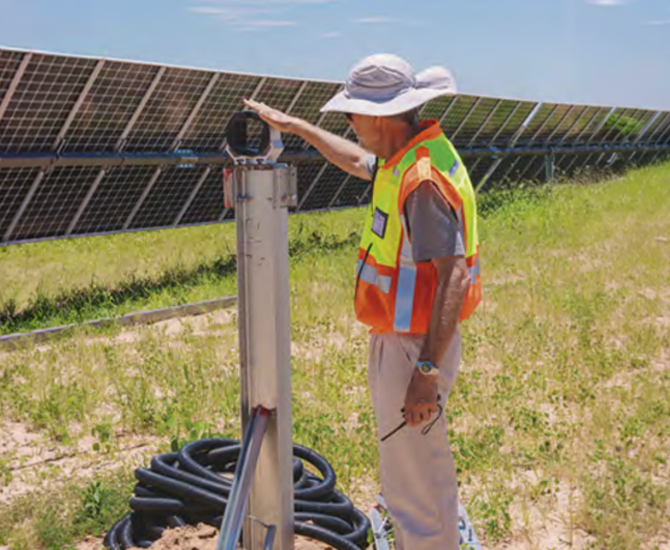


Our 2024 integrated report won the top 40 category at the 2025 CGISA integrated reporting awards. This award recognises Exxaro's commitment to innovation and excellence in integrated reporting.

Exxaro received five safety awards at the 2025 Coal Safe Awards – reflecting the progress we have made towards our goal of zero harm.
Read more about our safety awards.