Exxaro Resources Limited
Environmental, social and governance report for the year ended 31 December 2025


Our operations and value chain intersect with employees, contractors and communities, where impacts on safety, equality and access to essential services can arise. We strive to embed human rights as the foundation of the standards applied across our business to prevent harm and promote dignity.
Upholding these rights strengthens our social licence to operate, ensures compliance with national and global frameworks and supports resilient, equitable communities.
SERC and RBR committee
Oversees human rights policy implementation, reviews due diligence findings and monitors compliance with internal standards and global frameworks
The executive head: sustainability ensures alignment with the UNGC, manages human rights risk processes and reports progress to the group executive committee
Social impact, procurement, people and performance, legal and BU management teams implement human rights processes, conduct awareness training, manage grievances and ensure compliance across operations and the supply chain
We manage human rights through a proactive and structured approach that integrates strong governance, due diligence and consistent implementation across operations. Our human rights policy guides expected behaviours and aims to prevent adverse impacts, promote dignity and fairness, and strengthen the systems that safeguard people throughout our operations and value chain.
Key elements of our approach include:
We align our human rights approach with the following guidance:
| Organisation | What it means for Exxaro |
| South African Constitution, BCEA and Labour Relations Act | Foundation for labour rights, fair treatment and legal compliance |
| Minerals Council South Africa Human Rights Framework | Sector-specific guidance for managing human rights in mining operations |
| UNGPs on Business and Human Rights | Standard for due diligence, prevention of harm and remedy where impacts occur |
| ILO Declaration on Fundamental Principles and Rights at Work | Protects freedom of association, fair working conditions and prohibition of child or forced labour |
| OECD Guidelines for Multinational Enterprises | Responsible business conduct expectations across global value chains |
| UN Global Compact Principles | Alignment with principles on human rights, labour, environment and anti-corruption |
We conduct regular reviews to identify, prevent and mitigate actual and potential human rights impacts across our operations and communities. In addition, we review our governance processes, policies and operating practices for compliance with national regulations and international standards, accompanied by actionable recommendations, as well as internal standards and supporting documentation to integrate human rights and help to prevent our involvement in any adverse human rights impacts.
Following our due diligence conducted in 2024, the following key areas have been identified for improvement:
We conduct annual independent compliance audits at all BUs, covering environmental management, water use, air quality, SLPs, health and safety, with oversight from the combined assurance forum.
We encourage all stakeholders to report suspected fraud, corruption or human rights violations to our anonymous fraud and ethics hotline. Employees can also report human rights violations to supervisors, line managers and the people and performance department.
These focus areas include:
| Governance and ethics |
Our board oversees human rights considerations through its broader governance mandate, which includes economic transformation, fraud and corruption prevention, public health and safety, consumer protection, community development and environmental stewardship. All litigation matters are reported on giving consideration to possible ESG and human rights impacts. This oversight ensures Exxaro remains ethical and compliant. We prioritise the protection of human rights across our value chain by working with contractors and suppliers that demonstrate responsible conduct, as defined in our updated supplier code of conduct. The new supplier code of conduct (available on our website), approved in November 2025, confirms Exxaro’s commitment to protect and uphold human rights and our requirement that suppliers and business partners comply with our policy, failing which it will be considered a material breach, which may lead to termination. Ethical culture is reinforced through our mining with morals programme, which raises awareness of expected conduct and encourages employees to speak up when they see misconduct or potential human rights concerns. Robust governance structures, including board policy approval, oversight by two board committees and an internal escalation process for complaints are in place. |
|
| Respect for all communities |
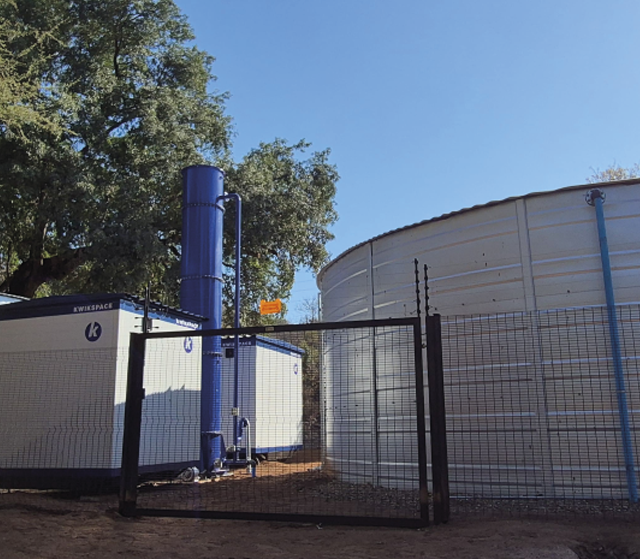
Exxaro recognises that communities have the fundamental right to access essential services and to live in safe and healthy environments. Our approach includes:
|
|
| Children’s rights |
Exxaro supports the rights of children to access quality education and to be treated in a manner appropriate to their age. Our approach includes:
|
|
| Environmental management and conservation |
We safeguard the environment and support community resilience by planning early for mine closure and prioritising rehabilitation throughout the mining lifecycle. Our approach includes:
|
|
| Equal opportunities, non‑discrimination and transformation |
Exxaro’s DEI strategy:
We train leaders and employees on gender equity and identity, LGBTQIA+ inclusion, racial equity, disability competence and inclusive culture to promote fairness and respectful conduct. Our DEI strategy |
|
| Human rights in the workplace |
We uphold internationally recognised labour rights in all workplaces. This includes:
|
|
| Freedom of association and the right to collective bargaining |
Exxaro respects every employee’s right to form or join a labour union without fear of reprisal, intimidation or harassment. We foster constructive dialogue with legally recognised union representatives freely chosen by our employees. We engage in good faith to build trust, support collective bargaining and maintain positive labour relations. |
|
| Safety and health in the work environment |
We maintain the highest safety standards and work towards zero harm across all operations. Our approach is supported by rigorous management systems, protocols and programmes that promote safe and healthy working conditions. |
|
| Security |
When protest action affects our operations, we are guided by the Regulation of Gatherings Act, 1993 (Act 205 of 1993), our stakeholder management and human rights policies and our security strategy, aligned with the Voluntary Principles on Security and Human Rights. All of our operations implement a human rights and security approach consistent with these voluntary principles. We also give ongoing training for employees on human rights principles:
|
|
Open communication and transparent engagement are essential for identifying and addressing human rights concerns. To support this, we provide several channels for stakeholders to raise concerns and take all grievances seriously. We investigate and address complaints appropriately.
Key collaborations and engagements include:
| Communities |
Using stakeholder engagement forums to discuss issues directly and build positive relationships with our communities |
|
| Employees |
Engaging employees on labour rights, fair treatment and ethical conduct through induction, training and awareness programmes, alongside participation in community-centred initiatives such as food garden projects |
|
| Suppliers |
Working with suppliers to promote responsible business practices and uphold human rights expectations across the supply chain |
|
| Government and regulators |
Engaging with national and provincial departments and regulators, including the DMPR, DoH and DoE, to support compliance with regulations that protect community and employee rights |
|
| Industry alliances |
Collaborating through the Minerals Council to promote responsible practices and address shared human rights concerns within the mining sector |
|
| Research and education institutions |
Partnering with universities on research and community empowerment initiatives that support local development and sustainable natural resource management |
|
| 2025 | 2024 | 2023 | ||
| Human rights grievances lodged against Exxaro | None | None | None | |
| Employees participating in DEI courses such as workplace harassment and diversity and inclusion | 38 | 136 | 196 | |
| Fraud and ethics allegations reported | 291 | 252 | 191 | |
| Allegations reported via the fraud and ethics hotline | 275 | 220 | 164 | |
| Percentage of allegations resulting in disciplinary inquiries | 5% | 4% | 23% | |
| Disciplinary hearings concluded | 14 | 5 | 22 | |
| Cases brought before the Council of Conciliation, Mediation and Arbitration (CCMA) | 6 | 4 | 2 |
In total, 19 disciplinary inquiries were recommended, 14 were concluded and five did not take place due to employee resignations. Of the 14 disciplinary hearings concluded in 2025 (2024: five), 14 ended with a verdict of guilty (2024: four), while zero resulted in a not-guilty verdict (2024: one).
With regard to CCMA cases, the Commissioner decided in favour of Exxaro once (2024: twice) and there was no instance where the matter was resolved through a mutual agreement (2024: none). Five other matters lodged with the CCMA in 2025 are still outstanding.
We invested R60 million in initiatives that support human rights in 2025, demonstrating Exxaro’s commitment to go beyond regulatory compliance in promoting sustainable development across our host communities. These investments focused on education, essential services, agriculture and health.

2026
Key actions
Our focus for 2026 is to scale up human capital development through targeted ECD support, whole school development and strategic education infrastructure. We will be partnering with various stakeholders to implement ECD by: