
Exxaro Resources Limited
Environmental, social and governance report for the year ended 31 December 2025


Executing our Sustainable Growth and Impact strategy enables us to embed ESG in everything we do. This is guided by Exxaro’s draft ESG policy, which includes our ESG objectives aligned to our strategy.
Our approach to ESG is informed and guided by:
Our Sustainable Growth and Impact strategy
ESG commitments and objectives as outlined in our policy
Identifying and addressing material matters
Internal and external factors
Global best practice
Our strategy takes an integrated, multi-stakeholder approach to building a resilient and sustainable future for the business. We aim to achieve this by transforming our operations and evolving into a diversified natural resources group. In doing so, we carefully consider our broader impacts and key ESG and compliance issues, which informed the development of our draft ESG policy.
Strategic objectives that support the execution of our strategy
We implement disciplined capital allocation while driving a positive energy transition and creating social impact. We will leverage our innovative organisational intelligence and take our people along as we focus on building a diversified natural resources portfolio.

We enhance focus on our core delivery areas of minerals and energy by expanding our footprint, simplifying our portfolio through targeted divestments of non-core assets and maintaining strong operational and digital excellence.

We empower people to create impact and we contribute towards sustainable livelihoods while ensuring our people have the requisite capabilities, skills, mindset and passion to do their best work, a core anchor in achieving our purpose.

Through focused portfolio decarbonisation and supporting initiatives, we continue to power positive social, economic and environmental impact.

We aim to positively impact our ecosystem during and after our operations in minerals and energy, contribute to community projects and build thriving, sustainable businesses through our social impact programmes. These programmes aim to drive lasting, scalable socio-economic upliftment and prosperity, independent of our presence and involvement.
*Formerly referred to as "Make our minerals and energy businesses thrive".
Data and technology
We use data, analytics and technology to advance innovation and drive efficiencies, productivity and targeted improvements across our business. This supports a low‑carbon future and unlocks long‑term competitiveness and strategic value.
Skills and talent development
We focus on building talent while fostering workforce capability to drive successful delivery against our strategy. To ensure sustainable long‑term resilience, we provide relevant skills development programmes to our people. We also offer bursaries and internships to nurture and create a resilient talent pipeline.
Partnerships
Partnerships with our stakeholders, including suppliers and industry players, are central to our success. Partnerships foster collaboration and provide a positive platform to facilitate growth, innovation and broad‑based impact.
Capital allocation
Our disciplined capital allocation framework guides our investment decisions, anchoring our investment criteria. This is essential for financial robustness, effective risk management and continued prudent strategic investment execution.
More information on our Sustainable Growth and Impact strategy can be found in our integrated report.
To ensure we effectively respond to ESG matters and improve our performance, we conducted a baseline assessment and gap analysis of our ESG projects and initiatives through our ESG PMO. The PMO also developed an ESG KPI template for consideration and application by project managers to facilitate the integration of ESG metrics during project development and implementation.
Our draft ESG policy sets out the principles that inform our approach to ESG matters and describes our commitment to sustainability and maintaining sound governance procedures. The policy aligns with global standards, stakeholder expectations and business priorities, enabling agile responses to emerging trends, regulatory shifts and operating context changes. We expect the draft policy to be approved by the executive committee in 2026.
Materiality considerations serve as a crucial guide for our reporting and ESG practices. The matters we deem material are those that significantly influence our ability to create and sustain value for Exxaro, our stakeholders and the natural environment. We use the impact materiality lens to guide the information relevant for our ESG reporting. Our strategic objectives and enterprise risk management (ERM) framework enable us to respond to these matters.
The 2025 review identified 25 material matters, grouped into seven overarching themes.
This report has detailed information about the following matters and themes (summarised in our integrated report):
Maintaining our social licence to operate depends on the strength of our relationships with host communities. We aim to foster mutually beneficial relationships with them, and invest in local development and sustainable job creation. As we diversify our business and contribute to the transition to a low-carbon economy, we are committed to ensuring our communities’ long-term sustainability.
Our employees are central to our business, driving our strategy and enabling our performance. We ensure a safe working environment, promote health and wellness, and maintain labour relations based on open communication and respect. Employee attraction and retention are vital to our growth and sustainability. Developing employees’ skills and creating an inclusive workplace empowers employees to grow and contribute to our business.
We uphold good corporate governance principles to build stakeholder trust, enhance our reputation as a responsible corporate citizen and boost our resilience in a changing environment.
We are responsible stewards of the natural resources upon which our operations and communities rely. Not only do we aim to mitigate and manage our negative impact on natural resources, we also contribute to enhancing ecosystem resilience. Our goal is to ensure a sustainable future for our employees, communities and the planet.
We provide detailed disclosure of the following themes and matters in the integrated report (summarised in this report):
We operate in a dynamic environment, shaped by social, political and economic issues. Globally, we are exposed to fluctuations in commodity prices, which impact the revenue generated from our resources. We are also affected by South African country risks, including policy uncertainty, inflation, stagnant economic growth, and infrastructure and service delivery challenges. To remain resilient, we must respond to these factors with agility while anticipating the future.
Business resilience supports the execution of our strategy. We reinforce our resilience through solid financial performance, supply chain management, effective capital allocation, responsiveness to logistical impediments, and private-public partnerships. Our innovation mindset and adoption of emerging technologies mean that we increasingly face cybersecurity risks. Cybersecurity measures are essential to mitigate these risks and protect our data assets.
Climate change presents significant risks for organisations that do not adapt. Furthermore, the transition to a low-carbon economy brings opportunities for organisations to evolve their business models. Our response includes diversifying our assets, growing our energy solutions business and optimising our coal portfolio by disposing of non-core assets.
^ Matter renamed or expanded.
* New matter.
Stakeholders assess a company’s success through a broader lens, looking beyond financial performance to its environmental impact, social responsibility and governance standards. Several forces are driving this shift:
To remain sustainable in the long term, companies must respond effectively to all three ESG dimensions. Expectations for transparent and comparable reporting continue to rise due to:
Furthermore, the global transition towards a low-carbon economy is fuelling ongoing demand for energy transition metals such as copper and manganese, which are crucial across the renewable energy value chain. Manganese, in particular, is gaining significance given its importance for steel-making and green infrastructure.
We have a draft ESG policy, as well as procedures, strategies and frameworks that guide and support our approach to ESG management and performance.
| Our adoption of TCFD recommendations – which are the foundation of the IFRS S2 standards – and aligning our reporting and business processes accordingly continues as we explore options to adopt IFRS S1 and S2. Our Climate Change Response strategy also aligns with TCFD recommendations. |  |
| Exxaro’s climate change position statement unpacks our journey to be carbon neutral by 2050, while our Climate Change Response strategy explains how we aim to achieve this and our efforts to build portfolio resilience in line with our Sustainable Growth and Impact strategy. Our response strategy and position statement will be updated in 2026 to reflect changes made to our decarbonisation roadmap and to consider new developments in climate change reporting regulations. We are developing our climate transition action plan, which will be completed in 2026. | |
| Supporting the Taskforce on Nature-related Financial Disclosures (TNFD) will enable us to better identify and manage nature-related risks. In 2025, we assessed TNFD requirements and conducted a review of our existing TCFD to confirm alignment on both disclosure frameworks. We plan to initiate implementation through a biodiversity footprint assessment as a foundational step. |  |
| Exxaro was the main sponsor at the South African Climate Summit, and contributed to the development of South Africa’s position at the UN Climate Change Conference of the Parties (COP30). The South African Climate Summit focuses on accelerating the country’s just energy transition and meeting the COP30 goals. |  |
| We are a signatory to the UNGC Active level and support the 10 universal sustainability principles. |  |
| Exxaro has participated in the Carbon Disclosure Project (CDP) climate change and water programmes since 2008 and 2010 respectively. |  |
| Our executive remuneration includes material ESG targets for water and energy efficiency. Our group STI and long‑term incentive (LTI) schemes incentivise delivery against key financial, operational and ESG goals aligned to approved annual business plans. |
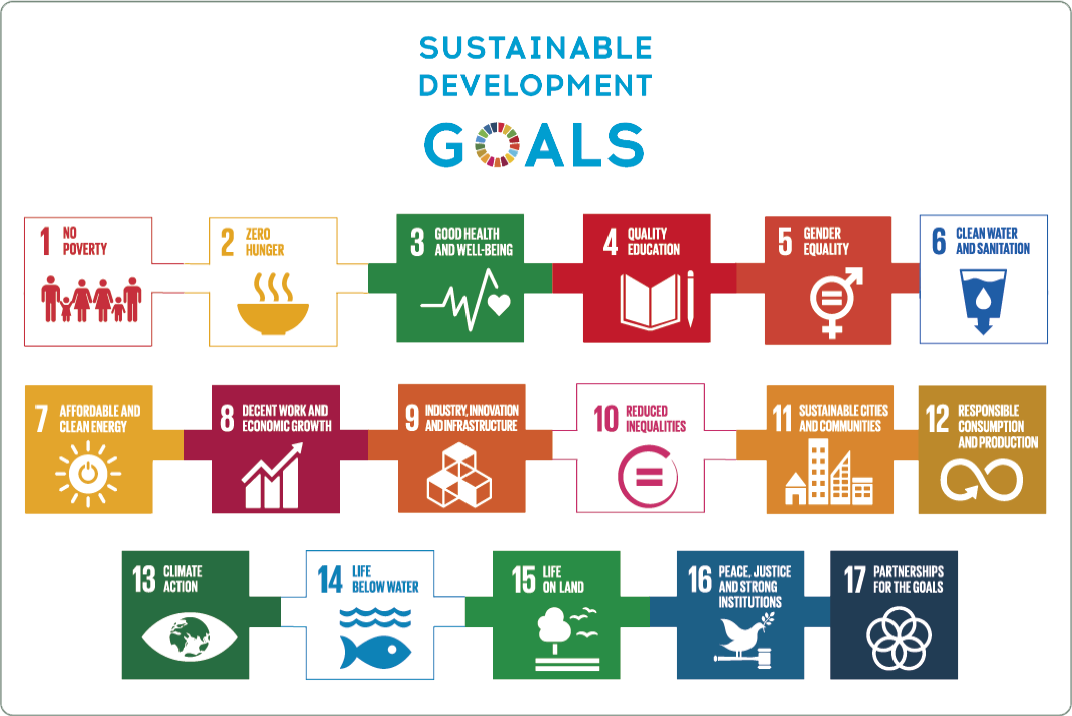
Exxaro voluntarily endorses the 17 UN SDGs. We also participate in South Africa’s National Business Initiative to align the SDGs with the country’s National Development Plan and implement leading practices to uphold the most material SDGs so that our business leaves a lasting positive impact.
The SDGs that Exxaro materially impacts are highlighted in colour.
We have set targets aligned with the SDGs for our Social Impact strategy