Exxaro Resources Limited
Environmental, social and governance report for the year ended 31 December 2025


Mining processes generate a range of waste streams that can impact the environment and surrounding communities. If not managed responsibly, waste can contaminate soil and water, create health and safety risks and undermine our social and environmental licence to operate. Regulators and stakeholders expect compliance with waste management legislation, as well as efforts to move towards circular economy practices within and beyond our operations.
Through responsible resource use and environmental stewardship, we advance long-term operational resilience and support shared value creation.
SERC and RBR and committee
Oversees implementation and monitoring of waste policies and operational initiatives
The executive head: sustainability oversees procedures and mechanisms across operations, supported by the senior specialist: waste management who reviews compliance with waste licences, policies and group‑wide recycling strategies
Sustainability managers and on-site environmental specialists oversee waste separation, recycling, collection and disposal through authorised service providers
We follow a cradle-to-cradle approach that prioritises waste prevention, reduction, reuse and recycling before disposal. Our management system is guided by the National Environmental Management: Waste Act, 2008, and the principles of a circular economy that seek to extract value from waste materials.
Key elements of our approach include:
General waste includes recyclable domestic and industrial materials such as plastics, paper, scrap metal, rubber products and conveyor belts. Waste is separated at source and collected by authorised service providers for recycling or safe disposal.
Our target is to divert 80% to 85% of recyclable waste from landfill by 2025. BUs receive rebates from recycling scrap materials and several operations (including Belfast, Grootegeluk and Matla) maintain salvage yards for sorting and temporary storage before collection.
Hazardous waste, including contaminated soil, used oil, hydrocarbons and medical waste, is separated from general waste and handled by licensed service providers. Sites generating more than 20kg/day are registered on the South African Waste Information System. Medical waste from Matla and Grootegeluk clinics is managed in line with healthcare and environmental standards.
The National Policy for the Management of Waste Electrical and Electronic Equipment establishes a framework for managing the end-of-life stage of electrical and electronic products in South Africa. It promotes prevention, minimisation, reuse and recycling in line with the National Waste Management Strategy 2020, and supports the transition to a circular economy through Extended Producer Responsibility regulations.
In line with this policy direction, Exxaro will conduct a group-wide assessment to identify, quantify and define the baseline of e-waste across operations. The study will guide collaboration with authorities and industry partners to explore beneficiation opportunities and align Exxaro’s Corporate Waste Management Standard with the framework.
Our open-pit mining operations use strip-mining methods that generate waste rock and overburden. These materials are temporarily or permanently stored on approved facilities within the mining right area and are progressively used for landform reconstruction and rehabilitation of mined-out areas. The volumes and footprints of shale, subsoil and topsoil stockpiles are routinely measured to inform rehabilitation planning and compliance reporting.
Inert waste such as construction and demolition debris is separated at source where feasible and either recycled or disposed of safely by authorised service providers. At Grootegeluk mine, this material is stored on site in an authorised building rubble facility.
Internal and external audits verify compliance with our waste management licences conditions and commitments, and track licence renewal cycles.
All operations report monthly on waste generation, recycling and disposal volumes, as required by National Waste Information Regulations and the Environmental Management System. We consolidate waste data to track performance and ensure compliance. To align with best practice, we monitor waste management performance through KPIs aligned with the JSE/FTSE and ESG indices.
We are in the process of procuring an integrated sustainability information software solution to enhance data quality, trend analysis and performance tracking. The system will support environmental, health, safety and ESG functions across the group, enabling data integration and ensuring alignment with global sustainability frameworks.
We also collate data on our waste tyre stockpiles at BUs in support of the national drive to reliably quantify waste tyre data. On 2 June 2025, the DFFE withdrew the Industry Waste Tyre Management Plan prepared by the Council for Scientific and Industrial Research, citing misalignment with current sector realities and policy intent. The withdrawal will enable a focused review to ensure that the final plan is implementable, transparent and responsive to operational and governance complexities in the sector.
Despite the withdrawal, Exxaro continues to strengthen data accuracy, assess processing technology options and support the development of a sustainable national model for waste tyre management.
We collaborate with the Minerals Council South Africa, the Waste Management Bureau and the Council for Scientific and Industrial Research to advance sustainable waste management and circular economy solutions. Research includes energy recovery from tyre‑derived fuel, pyrolysis, crumbing and material recycling. We also pilot recycling initiatives across our operations to connect research outcomes with practical implementation.
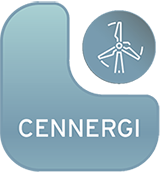
We integrate recycling initiatives into our SLPs to empower local communities through training and skills development. At Belfast, recyclable waste is sold to local recyclers, who benefit from lower financial and environmental costs by using fewer raw materials, water and energy in their production processes. A black youth‑owned company, contracted by Exxaro, employs community members to sort and collect these recyclable materials.
In partnership with the Lephalale local municipality and Impact Catalyst, we are developing integrated waste management solutions that support local economic development. These initiatives are focusing on solutions to professionalise waste pickers, beneficiate coal fly ash, establish material recovery facilities and raise community awareness on sustainable waste practices.
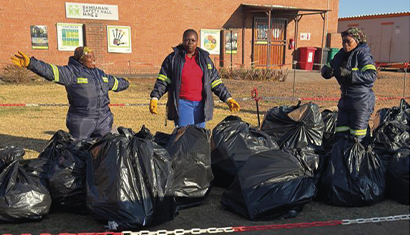
In August 2025, Matla launched a site-wide waste management clean-up and recycling awareness campaign to improve housekeeping and strengthen the culture of responsible waste handling. The initiative formed part of Matla's ongoing environmental stewardship drive and its commitment to continuous improvement in waste minimisation.
Strengthened waste management practices
A multidisciplinary team worked together to remove litter and improve waste segregation at source, encouraging ownership of environmental performance across departments.
Improved recycling access and participation
The environmental department installed new recycling stations in key operational areas, making segregation more accessible and boosting employee participation in recycling activities.
Increased awareness and shared responsibility
Awareness sessions and mass meetings reinforced the importance of proper waste disposal and recycling, fostering collaboration and pride in maintaining a cleaner, safer and more sustainable workplace.
Through initiatives such as these, Matla continues to embed environmental responsibility in daily operations while supporting Exxaro's Sustainable Growth and Impact strategy.
| Indicator (t) | 2025 | 2024 | 2023 | |
| Hazardous waste sent to landfill | 4 189 | 2 662 | 3 186 | |
| Hazardous waste recycled (oil) | 511 | 546 | 555 | |
| General (non-mineral) waste recycled | 2 434 | 2 457 | 2 703 | |
| General waste to landfill | 953 | 969 | 1 027 | |
| Total general waste generated | 3 443 | 3 374 | 3 621 | |
| Waste rock generated (m3) | 86 158 854 | 73 138 314 | 103 529 750 | |
| Single-use plastic (see CDP report) | 4 | 2 | Not recorded |
We improved waste management trends this year compared to 2024. We did this by enhancing waste separation and conducting employee awareness initiatives. Our general waste generation decreased by 1.1% and we diverted 71.9% of recyclable waste from landfill. Due to an increase in our mining fleet (haul trucks and light duty vehicles), we recorded an increase in coal residue material at Grootegeluk’s fleet wash bay. This resulted in an increase of hazardous waste generation by 43%.
Waste classification and downstream value creation
In line with the Waste Classification and Management Regulations, 2013, Exxaro completed the identification and classification of waste streams across all active and inactive mines. The appointed service provider is now mapping downstream value creation opportunities for each waste stream to enable BUs, including those in closure, to participate in circular economy initiatives. We are also defining environmentally responsible disposal methods for residual waste that cannot be diverted from landfill.
At Grootegeluk, a waste classification study undertaken in early 2025 analysed carbonaceous waste accumulated at silt traps. This material, previously disposed of as hazardous due to potential hydrocarbon content, was confirmed as non-hazardous waste. We will be submitting a formal application for declassification to the authorities, enabling the mine to reduce hazardous waste volumes.
We renewed waste management licences for Matla and Grootegeluk this year for 10 and 15 years respectively, confirming full regulatory compliance.
Belfast salvage yard
Belfast submitted a proposal to design and construct a centralised salvage yard to improve the storage and sorting of spares, scrap metal, used oil and pallets. The facility will strengthen on-site control of recyclable waste and increase the volume of materials diverted from landfill.
Office waste recycling
Exxaro appointed a waste management service provider to improve general waste recycling at our corporate office. The contract includes waste sorting, collection by approved recyclers, data tracking and analysis and verification of regulatory compliance. This structured approach supports consistent waste reporting and responsible recycling across the group. The corporate office was able to divert 67% of recyclable waste from landfill (2024: 65%).
Repurposing mine and power station waste
In April 2025, Exxaro and Eskom signed an MoU to develop technology-based solutions for shared waste management challenges. The partnership focuses on reducing brine from the Matla water treatment plant and fly ash from Matla power station by repurposing these byproducts into an engineered paste for mine backfilling and construction use. The initiative aims to reduce environmental impact, support circular economy practices and strengthen research collaboration between the business partners. Stakeholders, including Eskom’s ash beneficiation unit and local communities, will contribute to innovation, job creation and skills development.
Mineral beneficiation research
Exxaro is supporting Mintek’s research into extracting rare earth and critical minerals from coal fly ash and discards. The collaboration explores alternative uses of coal while advancing environmental stewardship and mineral beneficiation innovation.
Belfast waste champions
Mixing of general and hazardous waste remains a challenge despite ongoing awareness initiatives. To strengthen waste separation at source, Belfast introduced trained “waste champions” who act as on-site ambassadors for the mine’s Integrated Waste Management Standard Operating Procedure. The champions promote proper segregation practices, support compliance in their work areas and help reduce environmental risk by improving overall waste management performance.

2026
key actions