Exxaro Resources Limited
Environmental, social and governance report for the year ended 31 December 2025


Dear shareholders,
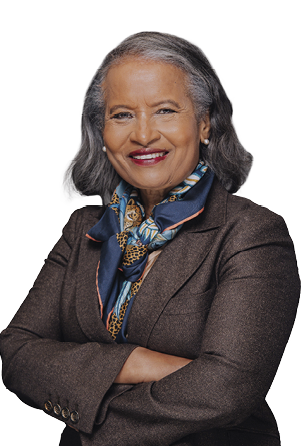
I am pleased to present the SERC report for the year ended 31 December 2025. The committee executed its statutory and board mandates by overseeing Exxaro’s impact and ethical performance, focusing on sustainable value creation and entrenching responsible corporate citizenship in the group.
Geraldine Fraser-Moleketi
SERC chairperson
In terms of the company’s MoI, committee members are elected annually at the AGM by shareholders on recommendation of the board. The committee is chaired by the lead independent non‑executive director, enhancing the importance and relevance of shareholder-entrusted, social, ethical and corporate responsibilities.
Effective 1 February 2025, the CEO and FD are no longer members of the SERC but retain standing invitations to committee meetings.
Refer to board of directors for members’ qualifications and experience.
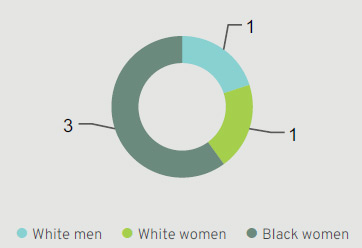
In 2025, the committee comprised a majority of independent nonexecutive directors, as per King IV recommendations, which facilitated the application of independent judgement on committee deliberations and decisions. As per the standard committee terms, the board chairperson and all board members are welcome to attend all meetings as observers.
The executive head: people and performance and executive head: sustainable impact are standing invitees to meetings. Other individuals with specific skills and expertise are also invited to assist members in their deliberations, including the executive head: strategic resilience and governance, executive head: energy, and head: internal audit. The group company secretary, governance and ethics attends each meeting and is the committee secretary.
Gender and racial diversity
Four committee meetings were held in 2025. The table below provides an overview of member designations and attendance:
| Members | Designation | Attendance at quarterly meetings | ||
| Geraldine Fraser-Moleketi | Lead independent non-executive director and SERC chairperson | 4/4 | ||
| Karin Ireton | Independent non-executive director | 4/4 | ||
| Dr Phumla Mnganga | Independent non-executive director | 4/4 | ||
| Nosipho Molope | Independent non-executive director | 2/4 | ||
| Peet Snyders | Independent non-executive director | 4/4 | ||
| Riaan Koppeschaar | Executive director and FD | 1/1* |
* Effective 1 February 2025, executive directors are not members of the SERC but hold standing invitations.
The committee’s mandate is derived from Exxaro’s commitment to proactively manage its economic, environmental and social impacts, and public interest, in addition to section 72(4) of the Companies Act, read with regulation 43, the MoI, paragraph 5.7(g) of the JSE listing requirements and King IV. The company recognises that Exxaro forms part of an interrelated community and, as such, may have positive and negative impacts on public interest and the global goal of sustainable development. The board has primarily entrusted the committee to oversee the company’s impact on public interest and its ethical performance.
The committee ensures compliance with Exxaro’s statutory duties and oversees that the company’s purpose, values, strategy and conduct align with responsible corporate citizenship.
The committee oversees the company’s ethics in business practices and its relationships with employees, other stakeholders and the natural environment. It also assists the board by monitoring the group’s achievement of shared sustainability goals and overseeing stakeholder management and ethics management.
As part of its responsibility mandate, the committee has oversight of how the company impacts planet, people and prosperity.
The committee’s terms of reference are reviewed and approved annually by the board. The November 2025 review ensured alignment with the current status of the business.
King V was implemented on 31 October 2025. Any changes required to align the terms of reference with King V will be presented to the committee in the first quarter of 2026.
While there is no regulatory requirement to conduct annual external independent performance assessments, King IV emphasises the board’s responsibility to regularly evaluate its effectiveness and that of its committees. In support of effective governance outcomes, Exxaro conducts external independent board and committee performance assessments every third year.
The internal evaluation of the committee’s performance and effectiveness was finalised in the first quarter of 2026. The strong result indicated an effective committee that provides adequate attention to its areas of oversight. SERC acknowledged improvements in culture stemming from the commitment of top management, the CEO and group company secretary, governance and ethics collaborating with SERC and an ongoing emphasis on awareness. Supply chain remains critical to achieving socio‑economic and operational goals.
The committee fulfilled its mandate during 2025 and remains an effectively functioning and contributing arm of the board.
The committee has statutory and board-mandated responsibilities to oversee the company’s impact on the public interest and ethical conduct, promoting sustainable value creation across the economy, society and the natural environment, and embedding responsible corporate citizenship throughout the group.
Social impact, which is part of Exxaro’s strategy, seeks to address material social and compliance matters requiring an integrated and long-term perspective, leveraging resources and collaboration. The Social Impact strategy proactively advances Exxaro’s community engagement and development priorities, aligning social investment with the group’s purpose and long-term value creation objective.
The SERC oversaw ESG governance, acknowledging that ESG imperatives increasingly shape the future of mining and energy industries. As such, the SERC oversees management’s plans to take advantage of opportunities identified for the coal, metals and energy businesses, including resource transition, linking ESG outcomes to value creation, unlocking new sources of value such as reskilling employees beyond mining services, mining responsibly and strategically for the future and decarbonising our business.
Engagements with various ESG rating agencies continue to improve our disclosure and implementation of ESG-related initiatives. In 2025, a study was commissioned to understand how Exxaro’s investors and shareholders prioritised these ratings agencies and to understand which ones were prioritised when evaluating Exxaro and making investment decisions.
The board is committed to a low-carbon transition and supports the path to sustainability in an era of climate change. Demonstrated commitments to a low-carbon transition include Exxaro’s investment in wind and solar power and preparation for a response to various global climate scenarios. The committee confirms that the company aims to be carbon neutral by 2050.
Each mine has a biodiversity plan aligned with the group biodiversity management standard. The plan guides how inspections, audits and biomonitoring programmes should be conducted, including mitigation or management of any impacts identified through monitoring.
All environmental incidents and mitigation measures are reported to and monitored by the SERC. The committee monitored the implementation of the decarbonisation roadmap that reflects short, medium and long-term targets. Priority actions are essential to the success of the journey, therefore further efforts went into refining actions. The decarbonisation plan was approved in the first quarter of 2025.
The SERC oversaw the integration of Exxaro’s social vehicle structures and continued to monitor performance against the Social Impact strategy.
The committee oversees the implementation of the Social Impact strategy, an integrated socio-economic development strategy in response to the dual challenges of social inequality and the systemic impacts of climate change. The Social Impact strategy is based on three pillars:
The committee and management continue ensuring delivery of the group’s SLP commitments and ESD programmes, leading to impactful contributions towards long-term community sustainability. The committee continues to engage robustly with stakeholders and spent three days in November 2025 visiting several of the centres supported by the company.
See the board’s annual stakeholder days in our stakeholder engagement.
The SERC oversaw the prioritisation of improving safety performance by approving a safety improvement plan to maintain responsible corporate citizenship.
The committee was informed of the development of a safety improvement plan, which included reviewing the five key safety focus areas and strategy. Various safety initiatives to educate and create awareness took place in pursuit of improved safety throughout the business.
In response to a rise in lifestyle diseases, Exxaro introduced health education, advanced monitoring technologies and personalised guidance on wellness initiatives with the aim of promoting health and reducing the risk of related illnesses.
Exxaro’s integrated wellness approach continues to improve and is designed to support employees holistically. Management makes concerted efforts to support the emotional, financial and occupational dimensions of wellness for all employees. The committee is pleased with this approach’s outcomes, impact and demonstrated results.
The committee monitors progress on the coal mine dust class action process.
Prioritising safety outlines our approach and performance, and more information about class action is found here.
The SERC continued to oversee the implementation of the DEI strategy in support of Exxaro’s overarching strategy as a key business value driver.
Leadership’s pledge to DEI is based on the following principles:
Overseeing the challenges and solutions brought about by this ideal is part of the committee’s joint accountability model.
Exxaro launched an employee engagement and culture survey in 2023 as part of the DEI journey. The committee has noted the progress, positive insights and key areas for improvement. A further culture pulse survey will be sequenced in March 2026, followed by a full culture survey in October 2026.
Our strategic priorities continue to drive the group’s DEI-enabling initiatives. Key objectives include:
See our website under careers for more on our DEI journey.
Exxaro is a signatory to the UN’s Women Empowerment Principles, which prioritise gender equality, full and productive employment, and decent work for all.
The committee scrutinised the people strategy and human capital levers in support of the five strategic objectives.
Achieving the Sustainable Growth and Impact strategy relies on properly executing the people strategy. The committee is therefore responsible for assuring the company’s standing regarding the ILO Protocol on decent work and working conditions, and the educational development of employees.
The committee oversaw progress against employment equity targets, with a focus on key Exxaro considerations flowing from the amendments to the EEA.
The committee was informed of the changes to the EEA and reviewed the key considerations for Exxaro in view of the amendments.
The committee continued to engage the eight key stakeholder groupings in terms of the key account management approach.
Exxaro has an approved stakeholder management policy in which establishing and maintaining strong, trusting and collaborative stakeholder relationships is equally beneficial for all stakeholders.
The policy confirms Exxaro’s key account management approach to stakeholder management. The committee supports the principle that managing social and ethics risks requires meaningful engagement with key stakeholders, as identified in the committee’s terms of reference.
Management conducted various stakeholder engagement initiatives in line with the Sustainable Growth and Impact strategy.
Relationship building remains a key outcome of the stakeholder engagement strategy in redressing the plight of poor people in communities surrounding Exxaro’s operations.
The committee reviewed the implementation of the anti-bribery and anti-corruption programme, including the roll-out of the conflicts of interest programme, to ensure an ethical culture.
As guided by OECD recommendations, the company has an anti-bribery and anti-corruption policy, and adopted adequate internal controls, ethics and compliance programmes and measures to prevent and detect bribery.
Based on the board-approved statement of strategic ethical intent, the committee oversees the implementation of the ethics management strategy and plan. Throughout the year and through the management ethics committee, measures were assessed and adapted for continued effectiveness and to mitigate the risk of becoming complicit in bribery, bribe solicitation, small facilitation payments and extortion.
Building an ethical culture under this committee’s oversight is captured in more detail here.

2026
focus areas
The SERC is pleased to confirm that, in carrying out its duties, it regarded King IV principles and recommended practices, and discharged its responsibilities in accordance with its terms of reference and the Companies Act. Beyond mere compliance, the committee is also satisfied that it has fulfilled its non-statutory mandate and that there are no material instances of non-compliance to disclose. If any material non-compliance existed, it was duly considered during the year in review.
On behalf of the committee
Geraldine Fraser-Moleketi
SERC chairperson
29 April 2026