
Exxaro Resources Limited
Environmental, social and governance report for the year ended 31 December 2025


The environmental operating context in South Africa is changing rapidly, reshaped by climate impacts, resource demand and evolving regulations.
For Exxaro, this context reinforces the need for proactive environmental management to ensure operational continuity, protect natural systems and support the country’s transition to a low-carbon, climate-resilient economy.
Our response is guided by the Sustainable Growth and Impact strategy, which embeds environmental considerations into planning, performance and long-term investment decisions. We implement responsible stewardship through a comprehensive environmental approach that includes:
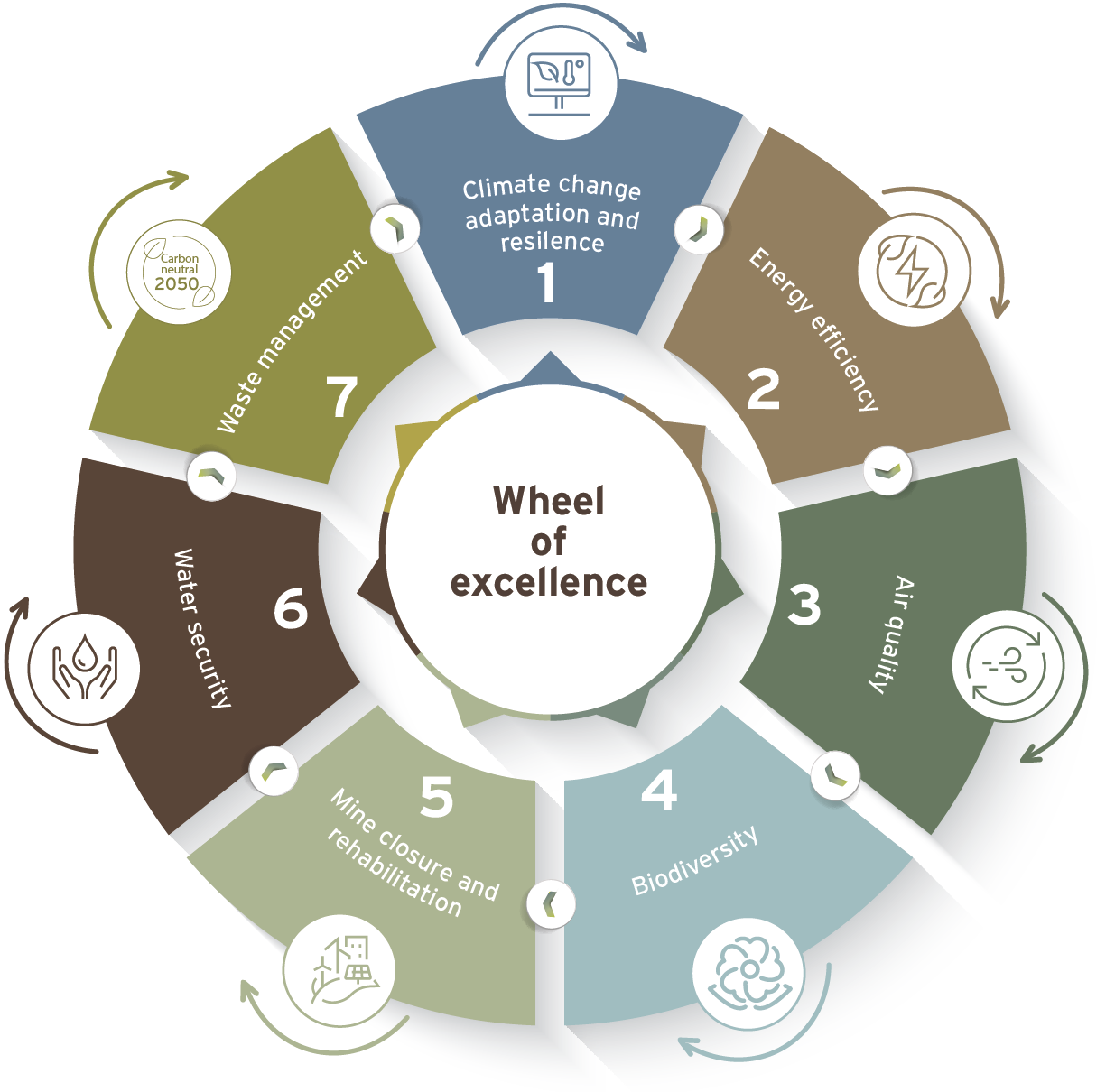
Exxaro’s wheel of excellence, detailed on the next page, provides a consistent framework for environmental stewardship across the group, ensuring alignment in compliance, implementation, monitoring and reporting at every level. It enables the seamless integration of new assets and guides BUs in building essential competencies to achieve high environmental standards.
Our environmental commitments are categorised into key focus areas, each underpinned by targeted strategies and policies:
1 Climate change adaptation and resilience: We are building our climate resilience by enhancing the adaptive capacity of Exxaro and communities and capitalising on strategic opportunities presented by the transition to a low‑carbon economy.
2 Energy efficiency: Our energy and carbon management programme drives efficiencies that support the transition to a low-carbon economy.
3 Air quality: We manage and mitigate the negative impacts of air pollution, including dust and particulate matter, emanating from our mining activities.
4 Biodiversity: Our low-impact, high-value approach supports ecosystem health to protect indigenous flora and fauna at our operations.
5 Mine closure and rehabilitation: Our mine plans consider land management, closure and concurrent rehabilitation with financial provision to ensure we honour our commitments. This, in turn, reduces long‑term financial liabilities.
6 Water security: Our water security plan is based on efficient water consumption, reuse and recycling to protect natural resources.
7 Waste management: Our cradle-to-cradle approach minimises waste generation through recycling and reuse within a circular economy.
We unpack our management approach and performance on each of these topics in this chapter.
High reliance on diesel-powered mining fleets, with limited commercial availability of low-carbon alternatives for heavy mining equipment
Dust fallout and PM exceedances, including two exceedances of the 1 200mg/ m²/day industrial limit at Grootegeluk linked to ash from the adjacent Eskom ash disposal facility
Slight delays in environmental licences, amendments and authorisations that affect planning certainty and project sequencing across operations
Environmental incidents
In 2025, Exxaro recorded 33 level 0 incidents (2024: 45), nine level 1 incidents (2024: seven) and zero level 2 and 3 incidents.
Refer to the databook for details of our level 1 environmental incidents.
Managing environmental complaints
Environmental complaints can be raised during stakeholder engagements, by phone, letter, or in the complaints book at each mine entrance. These are managed by environmental teams with support from head office specialists, who ensure corrective actions are implemented and monitored. Exxaro aims to implement a sustainability management system that will streamline the reporting and management of safety, health and environment-related complaints within the next two years.

2026
key actions
In 2026, we will focus on strengthening climate resilience and accelerating our decarbonisation journey. This includes: