Exxaro Resources Limited
Environmental, social and governance report for the year ended 31 December 2025


As a mining and energy business, we are exposed to physical and transition risks that affect our operating costs, production stability and long-term competitiveness. At the same time, the transition to a low‑carbon economy presents opportunities to improve efficiency, invest in renewable energy and contribute to South Africa’s energy transition.
Building resilience to climate change supports our commitment to secure long‑term business continuity, protect our environment and communities and align with pressing global climate goals.
SERC and RBR committee
Oversees climate change response, aligns initiatives with our decarbonisation roadmap and tracks progress against group climate targets
The executive head: sustainability leads decarbonisation execution and reports progress to the group executive committee
The PMO coordinates project execution, while BU management teams implement emissions reduction projects, energy efficiency and resilience measures and track performance
We take an integrated approach to climate change that addresses both emissions reduction and the need to strengthen the resilience of our operations and communities. Our Climate Change Response strategy and decarbonisation roadmap guide our planning as we prepare for more variable climate conditions.
Key elements of our approach include:
We are strengthening our ability to anticipate and respond to the physical impacts of climate change, such as extreme heat, drought and severe weather. As we refine our understanding at a site level, we will use climate data and predictive tools to assess how changing climate conditions may affect our operations, communities and value chain partners. This will enable us to strengthen resilience measures in areas such as water management, infrastructure design, land rehabilitation and emergency response.
The Climate Change Response strategy will be updated and we are currently developing BU adaptation and resilience plans. This ensures that our strategic direction reflects site-level insight and remains aligned with our Sustainable Growth and Impact strategy.
The Climate Change Act came into effect in 2024 and draft regulations on carbon budgets and mitigation plans were released in 2025. We are assessing the implications of these developments to align our compliance, resilience planning, reporting and governance practices with national requirements.
A key part of our climate response is reducing the GHG emissions associated with our operations and value chain.
Our emissions reduction initiatives are supported by our efforts in optimising energy efficiency and implementing cleaner energy sources at our operations.
We submit an annual pollution prevention plan report to the DFFE, outlining initiatives to reduce diesel consumption and associated scope 1 emissions at our operations. The 2025 reporting year marks the final PPP cycle and from 2026 we will transition to the mandatory carbon budget and GHG mitigation plan system, pending finalisation of the National GHG Carbon Budget and Mitigation Plan Regulations.
| Achieved reduction | Anticipated reduction | Total | |||||
| Project | Implementation | 2021 | 2022 | 2023 | 2024 | 2025 | Total |
| Grootegeluk in-pit crushing and conveying project | Ongoing | 6 948 | 7 723 | 8 773 | 7 363 | 6 050 | 36 857 |
| Road management and improvement | Ongoing | 3 517 | 5 975 | 1 891 | 848 | 684 | 12 915 |
| Pantograph utilisation optimisation | 2021 | 2 199 | 2 337 | 1 359 | 2 689 | 3 561 | 12 145 |
| Out-of-cycle time reduction | 2021 | (2 170) | 624 | 398 | (5 905) | 1 604 | (5 449) |
| Autonomous drilling | 2021 | 47 | 50 | 52 | 220 | 193 | 562 |
| Total | 10 541 | 16 709 | 12 473 | 5 215 | 12 092 | 57 030 | |
Assumptions used to estimate anticipated GHG emission reduction: electrical and diesel conversion factors, and the project scope, are consistent.
Exxaro’s actual carbon emission reductions from 2021 to 2024 were 44 938tCO₂e. This is 10% lower than the originally projected savings of 49 786tCO₂e. The shortfall is largely attributed to lower-than-anticipated savings from certain projects, where actual performance did not meet initial estimates. Despite this, the reductions we achieved represent a significant contribution towards Exxaro’s climate goals and highlight the importance of timely implementation and accurate forecasting for future initiatives.
We collaborate across sectors to support South Africa’s transition to a low-carbon economy. These partnerships enable research, knowledge sharing and regional socio-economic development linked to climate mitigation and resilience.
We collaborate with research institutions, industry bodies and government stakeholders to expand climate knowledge, test emerging technologies and support sustainable development outcomes linked to the energy transition.
| Focus area | Partners | Purpose | Outcomes | |||
| Climate science, adaptation and planning |
|
Strengthen climate change understanding and support adaptation planning, policy analysis and decision making |
|
|||
| Low-carbon technologies and operational solutions |
|
Develop and test technologies that support energy efficiency and emissions reduction within mining and energy value chains |
|
|||
| Shaping transition pathways |
|
Align with national climate priorities, contribute to policy discussions and support coordinated transition planning |
|
|||
Awareness and training are central to strengthening climate resilience in our business and communities. These initiatives support behaviour change and reinforce our ability to respond to the impacts of climate change over time.
We run climate change awareness and training programmes that cover carbon pricing, carbon tax, adaptation, carbon budgets and mitigation from global, national and business perspectives. Climate change masterclasses have been delivered over the past four years and will continue into 2026 and beyond.
We piloted a carbon footprint calculator mobile app in 2023 to help employees track and assess their emissions. While uptake was limited due to privacy considerations, we are exploring tools that can support employees to understand and reduce their carbon emissions in a secure and practical way.
For the past five years, we have delivered community climate awareness campaigns focused on the environmental and health impacts of climate change. These programmes form part of our Social Impact strategy and support resilience in communities linked to our operations. Future campaigns will place greater emphasis on practical approaches to adaptation and improving access to renewable energy solutions.
We monitor energy and carbon performance across our operations to support informed decision making and continuous improvement. Our reporting practices align with recognised standards and national regulatory requirements.
We track monthly energy and carbon data at all BUs and monitor progress against our carbon intensity target.
We monitor scope 1, 2 and 3 emissions annually using the operational control accounting approach. We also track carbon and energy performance through our STI scheme at group and BU levels, which informs reward outcomes for employees and executives.
We are investigating data solutions that provide real-time feedback on carbon performance. These systems will support quicker response to emerging risks or opportunities to reduce emissions.
To improve the accuracy of emissions quantification and reporting, we are conducting a study to develop tier 3 production emission factors for Exxaro’s coal characteristics and reviewing our scope 3 quantification methodologies.
We align our climate reporting, emissions accounting and compliance activities with the Climate Change Act, the National Environmental Management: Air Quality Act, the Carbon Tax Act and the DFFE’s GHG reporting regulations. Our emissions are measured and reported in line with the GHG Protocol’s Corporate Accounting and Reporting Standard. Our GHG data is submitted annually to the DFFE in line with regulatory requirements.
We also participate in recognised external disclosure frameworks to support transparency and comparability. We have reported to the CDP climate change programme since 2008, providing information on our energy consumption, emissions and carbon performance at BU and group levels. We also participate in the CDP water programme and the supplier engagement programme to assess water security and supply chain risks in the context of climate change. These disclosures are subject to external assurance to support confidence in our reporting.
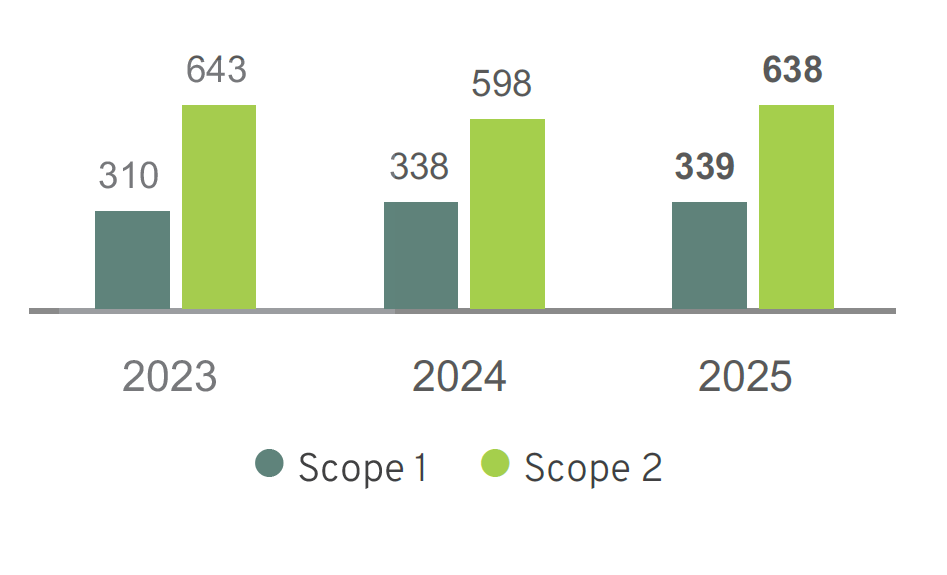
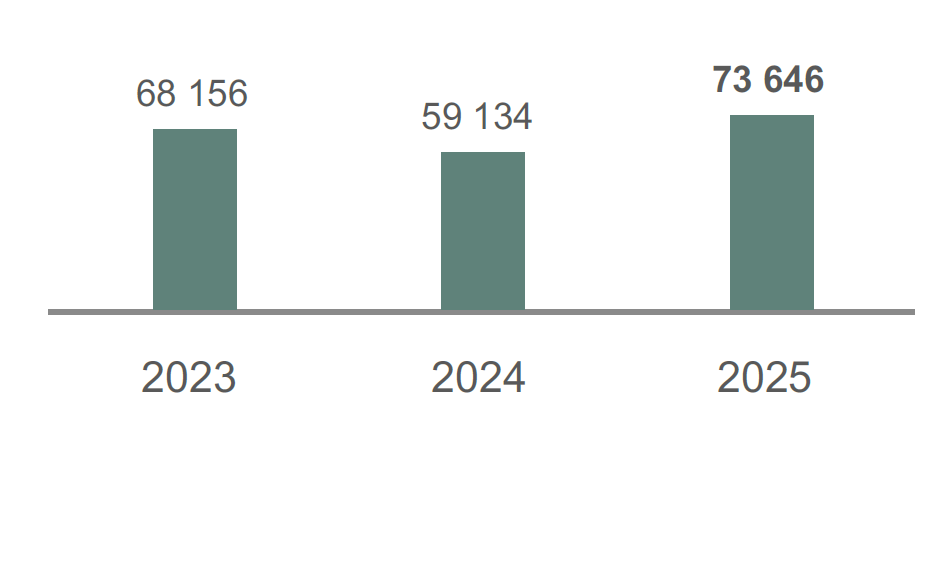
Annual scope 1, 2 and 3 emissions data is available below.
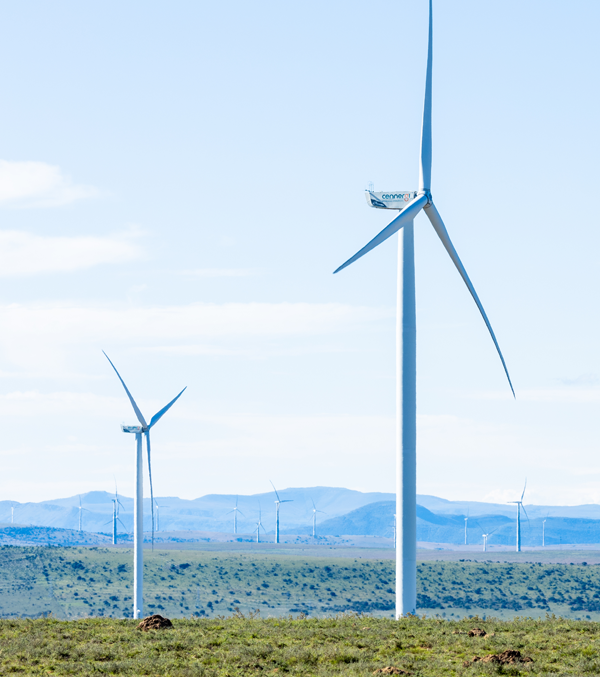
Exxaro is making substantial investments in renewable energy, as demonstrated through the commencement of construction on Cennergi’s 140MW Karreebosch windfarm in partnership with G7 Renewable Energies.
The project will supply clean electricity to Northam Platinum’s operations through a 20-year power purchase agreement, with power wheeled through the national grid. Karreebosch marks a major step in scaling our renewable energy portfolio and advancing South Africa’s decarbonisation ambitions and the transition to a cleaner, more resilient energy system.
Strategic significance
Community impact
The Karreebosch windfarm reached financial close in February 2025 and has an expected construction period of 24 months. The project supports decarbonisation and diversification as set out in our Sustainable Growth and Impact strategy and demonstrates our commitment to delivering reliable and sustainable energy solutions.
To enhance our performance, we completed a decarbonisation technology study that assessed fleet optimisation opportunities and is guiding the next phase of implementation planning.
The 14% increase in carbon intensity compared to 2024 is due to the decrease in annual RoM total tonnes mined (TTM) and the increase in Eskom’s grid emission factor to 1.08tCO2e/MWh (2024: 1.04tCO2e/MWh). Our year-to-date carbon intensity is below the 2025 target of 4.83tCO2e/TTM.
Emissions performance metric |
2025 | 2024 | 2023 |
|---|---|---|---|
| Total carbon intensity (tCO2e/ktTM)RA | 4.71 | 4.12 | 4.41 |
| Scope 1 emissions* (tCO2e/ktTM)RA | 1.64 | 1.49 | 1.41 |
| Scope 2 emissions* (tCO2e/ktTM)RA | 3.07 | 2.63 | 2.96 |
| * | Only the operating mines’ carbon emissions were taken into account for the intensity calculations. This excludes the ConneXXion, Durnacol, Hlobane, FerroAlloys, Tshikondeni and Ferroland Manketti. |
| RA | Reasonable assurance provided. |
Scope 1 and 2 GHG emissions (ktCO2e)
Scope 3 GHG emissions (ktCO2e)*
Carbon emission by source (ktCO2e)
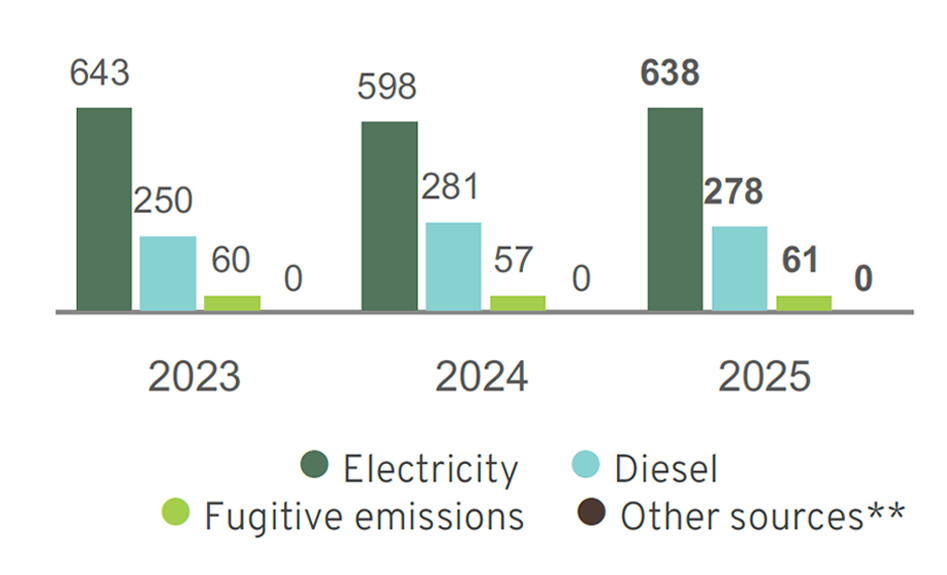
| * | Scope 3 emissions for 2023 and 2024 include domestic sales. 2025 also includes exports of 14 780ktCO2e. |
| ** | Source proportion. |
Refer to the databook for more detail on our scope 1, 2 and 3 GHG emissions.
R1.1 million
R0.3 million
R4.6 million
for production-related emissions, ie fugitive methane emissions associated with the coal seams (2024: R3.3 million)
C for climate
B for water security
For more information on our CDP performance, please refer to www.cdp.net and the databook.
In 2025, we amended our GHG accounting policy to confirm the operational control boundary for emissions reporting. This means we report emissions only from operations under Exxaro’s management control, excluding joint ventures such as Mafube.
Our scope 3 accounting approach was also updated in line with the GHG Protocol. To ensure consistent and transparent disclosure, we assume that all coal sold annually is ultimately combusted and report this under scope 3 category 11 (use of sold product).
We also submitted the revised CDP questionnaire covering climate change, water and biodiversity for 2025. These disclosures are externally assured each year.
The board approved our decarbonisation roadmap in March 2025. The roadmap provides a detailed pathway towards being carbon neutral by 2050.
We have started developing climate change adaptation and resilience plans for each BU. These plans will identify sitespecific climate risks, define adaptation pathways and consider technological solutions to support operational continuity. The plans are expected to be finalised in the first quarter of 2026.
We are developing a strategy to identify appropriate offset solutions, including nature-based carbon offset projects and to guide our participation in the carbon market. The strategy will outline the role of carbon offsets within our broader decarbonisation approach and define the principles that shape project selection and engagement.
Addressing scope 3 emissions remains a shared priority across the power value chain. In 2025, we signed an MoU with Eskom to explore opportunities to jointly measure, manage and reduce scope 1, 2 and 3 emissions and other air pollutants.
The partnership focuses on identifying technology and operational interventions, supporting workforce transition opportunities, and strengthening transparent reporting to ensure accountability in advancing South Africa’s climate transition. In addition, we collaborate with the Council of Geoscience on carbon capture, utilisation and storage for decarbonisation and the advancement of the impactful energy transition.
We participated in New York Climate Week, where discussions focused on policy developments, energy transition pathways, decarbonisation technologies, nature-based solutions and climate resilience. These insights inform our climate planning and support our approach to adaptation at site level.
We also sponsored and contributed to the South African Climate Summit to advance national dialogue on COP30 outcomes, climate transition and collaborating with industry, government and civil society on shared resilience and decarbonisation priorities.

2026
key actions
In 2026, our focus will be to advance site-based resilience planning, strengthen emissions reporting methodology and enhance data credibility across the value chain. This includes:
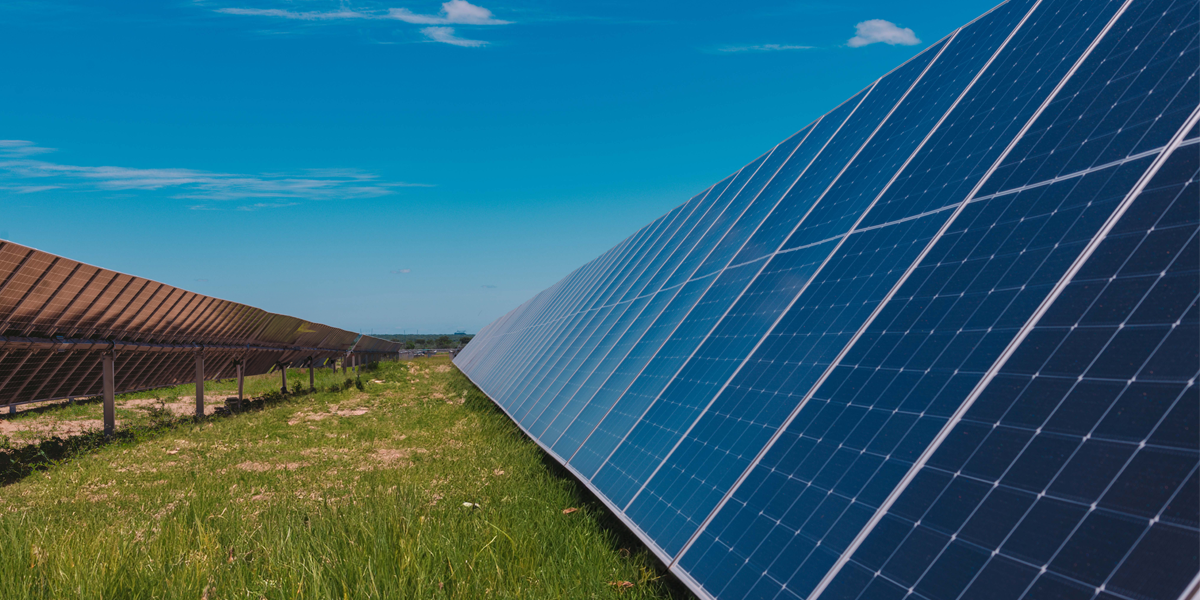
The LSP is Exxaro’s first large-scale solar energy facility developed to supply clean electricity directly to the Grootegeluk mining complex. The project reflects a major step in our decarbonisation roadmap that increases our energy security and reduces scope 2 emissions.
Located on Exxaro-owned land near the mine, the LSP will generate approximately 176GWh of renewable electricity each year once fully operational. This is expected to meet around 30% of Grootegeluk’s electricity demand and reduce the mine’s scope 2 emissions by approximately 25%. The project is owned by Cennergi and will supply energy under a long-term power supply agreement. Development of the project commenced in 2021, with construction starting in 2023 and the plant being commissioned in December 2025. Full commercial operation is expected in the first half of 2026, with green electrons already being delivered to Grootegeluk.
The LSP has also created socio-economic benefits for the Lephalale community. Local contractors and suppliers were prioritised during construction, supporting jobs and skills development linked to South Africa’s growing renewable energy sector. As the facility becomes operational, ongoing maintenance and operational roles will continue to provide local economic opportunities.
The project marks the start of Exxaro’s broader clean energy journey. Future phases are planned to explore storage solutions and additional renewable capacity to further increase the share of clean energy powering our operations.
Decreased emissions
Increased energy security
Cost efficiency over time
Local economic development