
Exxaro Resources Limited
Environmental, social and governance report for the year ended 31 December 2025


Dear shareholders,
During the year, the committee carried out its responsibility of reviewing the board’s composition and independence. Importantly, the committee oversaw a smooth management transition with the appointment of a new CEO.
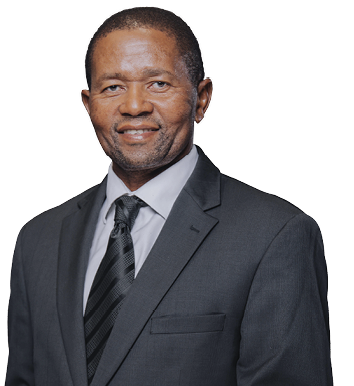
Mvuleni Geoffrey Qhena
Nomination committee chairperson
The committee benefits from cross-membership with the remuneration committee. The terms of reference require the committee to comprise at least three non-executive directors, with the majority being independent.
The board ensures committee members have a suitably balanced blend of skills and experience to enable the committee to discharge its functions.
The CEO may not be a member of this committee but is a standing invitee to meetings. Executive management may attend committee meetings if and when necessary.
Refer to board of directors for members’ qualifications and experience.
Gender and racial diversity
The committee held three scheduled meetings and two special meetings during the year. During the leadership transition, regular updates were held between the committee and board. The committee’s attendance of 100% indicates high levels of engagement and commitment by its members.
| Members | Designation | Attendance at quarterly meetings | Attendance at special meetings | |||
| Mvuleni Geoffrey Qhena | Independent non-executive director and nomination committee chairperson | 3/3 | 2/2 | |||
| Geraldine Fraser-Moleketi | Lead independent non-executive director | 3/3 | 2/2 | |||
| Dr Phumla Mnganga | Independent non-executive director | 3/3 | 2/2 | |||
| Zwelibanzi Mntambo* | Non-executive director | 1/1 | 2/2 | |||
| Billy Mawasha** | Independent non-executive director | 1/1 |
| * | Retired on 15 May 2025. |
| ** | Appointed on 5 June 2025. |
In line with the JSE Listings Requirements, the committee is constituted as a committee of the board in terms of the Companies Act, the company’s MoI and King IV. The committee is governed by its board-approved terms of reference, which set out its role and responsibilities.
The main purpose of the committee is to determine and evaluate the adequacy, efficiency and appropriateness of the group governance structure, practices and processes. The committee’s areas of responsibility include:
The work of the committee was further contextualised by the launch of King V, effective from the beginning of January 2026, and the ongoing simplification of the JSE Listings Requirements, with implementation phases during January and February 2026. These developments underscored the need for agile and effective governance, as well as an appropriately skilled and composed board attuned to evolving regulatory expectations. Accordingly, these matters were incorporated as training topics during the board’s governance sessions.
The committee’s terms of reference are reviewed and approved annually by the board. The November 2025 review ensured alignment with
the current status of the business.
King V was implemented on 31 October 2025. Any changes required to align the terms of reference with
King V will be presented to the committee in the first quarter of 2026.
While there is no regulatory requirement to conduct annual external independent performance assessments, King IV emphasises the board’s responsibility to regularly evaluate its effectiveness and that of its committees. In support of effective governance outcomes, Exxaro conducts external independent board and committee performance assessments every third year.
The internal evaluation of the committee’s performance and effectiveness was finalised in the first quarter of 2026. The results indicated a strong and effective committee, with a requirement to strengthen Exxaro’s short to medium-term board and executive succession plans.
The committee fulfilled its mandate during 2025, and it remains an effectively functioning and contributing arm of the board.
To enable the board to operate effectively and in the company’s interest, deliberate policy parameters are set and careful consideration is given to achieve a suitable board composition and an appropriate balance of power between individual directors and/or groups of directors.
In keeping with good corporate governance, the board embraces the constitutional principles of equality and inclusion for all. The nomination committee enables the board’s commitment to strive for a knowledgeable, skilled, experienced, diverse and independent governing body that fully discharges its role and responsibilities with objectivity and effectiveness.
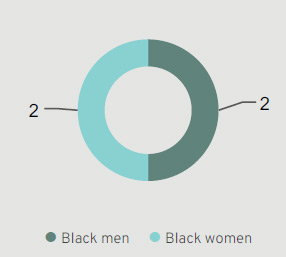
The committee focused on exceeding the gender diversity and inclusion target set by the board in 2021. We recognise the need to increase the representation of people with disabilities on our board.
Regarding gender diversity, we exceeded the 40% black female director target. The committee is pleased with the progress to date and will continue to consider targets set by the board in any future appointments. No changes were made to the 2021 targets.
In addition to its own targets, the board aims to pursue the compliance targets set by the dtic regarding management and control, and to positively contribute to Exxaro’s B‑BBEE rating.
The table below reflects current targets and Exxaro’s achievement, enabled by the committee:
| Target | Previous reporting period (31 December 2024) |
Actual as at 31 December 2025 |
Status as at 31 December 2025 |
|||
| Size: minimum of four and maximum of 20 members | 15 | 12 | Within target range | |||
| Race: 60% black | 80% | 80% | Achieved | |||
| Gender: 40% black women | 47% | 42% | Achieved | |||
| Age: average of 55 years | 57 years | 56.4 years | Ongoing | |||
| Tenure: average tenure of seven years (two years mentoring a successor), excluding executive | Four years | 4.7 years | Ongoing | |||
| Appropriate diversity mix based on prevailing strategic objectives | The board focuses on the principles of a balanced governing body by guiding strategic decisions around broader diversity at board level. The range in gender, race, age, field of knowledge, skills and experience, and tenure ensures well-informed and thoughtful consideration of all board matters. | |||||
Note: the table includes executive directors.
The number of board members should promote accountability, independence and healthy, constructive debate. In terms of the company’s MoI, one-third of all non-executive directors are subject to retirement by rotation and re-election by shareholders at least once every three years, if available and eligible to stand, subject to recommendation by the nomination committee and the board.
The nomination committee is responsible for the annual consideration of director retirement and for making recommendations to the board regarding the re-election and election of directors for approval by shareholders at the AGM. In fulfilling this responsibility, the committee assesses individual director performance, meeting attendance, tenure, independence and the overall composition of the board, including diversity and succession planning.
This process supports an appropriate balance between board refreshment and continuity, enabling the introduction of new skills, experience and perspectives while retaining institutional knowledge and expertise. The committee also considers whether each director remains fit and proper to continue in office, including an assessment of independence against the criteria and indicators set out in King IV. From 1 January 2026, in line with King V, directors with a tenure exceeding nine years will no longer be classified as independent.
Changes to the board will be presented to shareholders at our 2026 AGM.
The committee achieved its mandate to establish and maintain a board directorship continuity programme through its recommendation to appoint Isaac Malevu as a member of the RBR committee, effective from 1 January 2025 and as a member and chairperson of the logistics committee from 5 June 2025. Further, Billy Mawasha was appointed as a member to the remuneration and nomination committees, also effective 5 June 2025.
The board director appointment process is formal and transparent, in line with the nomination and appointment policy which was reviewed and approved in 2025. Exxaro’s website contains a summarised guideline of this process.
We continuously monitor the group governance structures and framework to ensure clear guidance to the group on monitoring and oversight, authority and decision making. Policies are captured to ensure Exxaro achieves its strategy.
The nomination committee considers the topics to be addressed at the annual board governance sessions, which provide directors with focused inputs from regulatory, strategic and economic perspectives. The directors attended two board governance sessions and engaged with subject matter experts on the geopolitical landscape, JSE requirements, the JSE simplification project, the takeover defence manual, an introduction to King V, the Exxaro compliance universe and Ethixx at Exxaro (including AI). In addition, the audit committee held a deep dive on rehabilitation provisions.
Throughout the year, our directors receive information and opinions on changes within the regulatory framework. The board has a designated reading room where topical and relevant information is shared. Directors are recommended to consider various training and development programmes to support ongoing development.
New director induction includes an introduction to management, access to all relevant company administration information, meeting management systems and processes, as well as constitutional documents, the delegation of authority framework and other policies. The induction programme includes an introduction to the company’s strategy, group governance structure, operations and stakeholder engagement model, and key advisers.
Succession planning for non-executive directors is iterative and part of an ongoing programme of planning and discussion by the nomination committee. Succession planning is based on the board’s broader diversity and inclusion policy.
The policy is formulated using a holistic approach to diversity, with the aim of inclusion and supporting the group’s strategic focus areas. In accordance with succession planning needs, filling independent non-executive director board vacancies is continuously addressed.
Given the changing context, the committee contributes to a governance enhancement programme aimed at aligning strategic changes in the group with board and board committee composition. The committee’s terms of reference and mandate are reviewed annually.
The committee monitors executive leadership succession planning. Succession planning supports the building of our senior leadership and executive pipeline. In November 2025, a succession planning proposal was submitted to the committee for input prior to being presented to the board.
The committee considered recommendations flowing from the 2025 annual board governance roadshow. The roadshow’s purpose is to enable proactive engagement with our investor community to outline Exxaro’s positioning on long-term value creation and leverage ESG for business resilience and sustainability.
Key themes raised by shareholders and investors that require further board consideration in 2026 will be monitored by the committee.
The committee approved the board performance evaluation process and considered the implementation of outcomes flowing from the assessments. The robust process included an independence categorisation survey, one-on-one interviews between the chairperson and each board member, an evaluation questionnaire covering the performance of the board and the seven committees, biannual declarations of interest and directors’ skills assessments against a defined knowledge and experience matrix.

2026
focus areas
The nomination committee, in carrying out its respective duties, duly regarded the principles and recommended practices of King IV. The committee is satisfied that it has considered and discharged its responsibilities in accordance with its terms of reference.
On behalf of the nomination committee
Mvuleni Geoffrey Qhena
Nomination committee chairperson
29 April 2026