Exxaro Resources Limited
Environmental, social and governance report for the year ended 31 December 2025


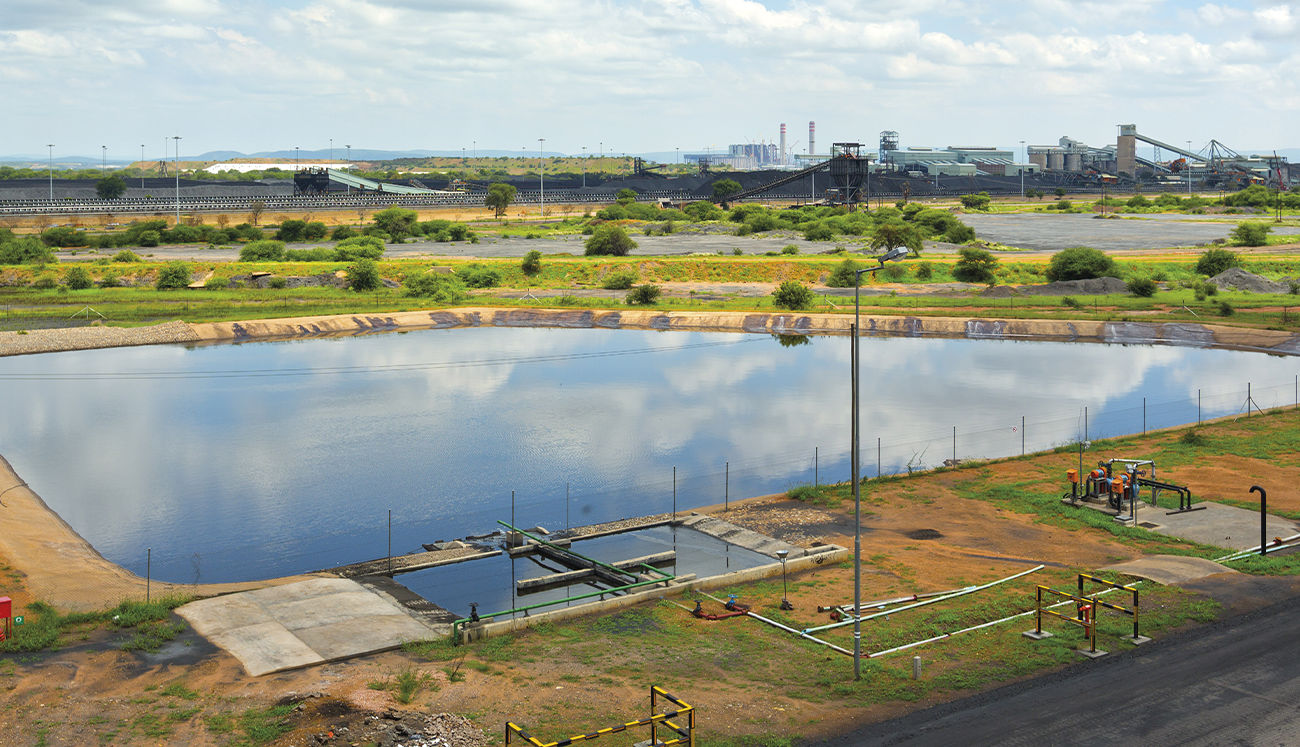
Our operations span large geographical areas that face increasing water scarcity and climate variability, which heighten operational and environmental risks. Responsible water management is therefore a business necessity and a social obligation.
By improving water efficiency, protecting quality and maintaining the integrity of natural water systems, we ensure compliance with regulations and uphold our commitment to be a responsible steward of valuable shared resources.
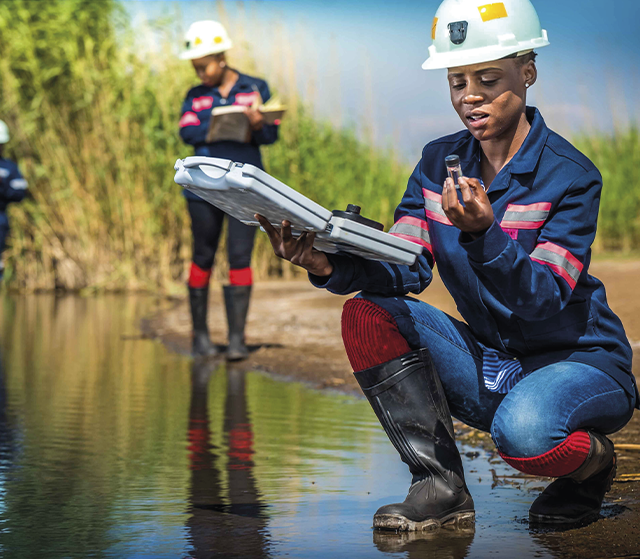
Our integrated water management across the mining lifecycle is supported by our group water policy and water management standard. These guide how each operation plans water use, manages withdrawal and discharge, maintains water systems and prepares for closure. Site-specific water management plans translate these requirements into operational controls, monitoring and improvement actions.
Key elements of our approach include:
If not effectively managed, water-related risks can lead to production stoppages, financial loss and non-compliance with water authorisations. This can affect our licence to operate, increase competition for scarce resources and undermine our biodiversity efforts.
We mitigate these risks through water conservation and demand management, contamination prevention and treatment processes that ensure water discharged to the environment meets required standards. We apply water-related risk assessments, stormwater controls, water balance simulations and measures to secure operational and potable water supply. To strengthen resilience, we incorporate climate analytics, including South African Weather Services outlooks, into operational planning and decision making.
Our approach aligns with the NWA, the MPRDA, NEMA regulations and WULs. We also align with voluntary water reporting standards and are working towards full alignment with the Global Industry Standard on Tailings Management.
We track water use, reuse and discharge across all operations and report performance in line with the CDP water programme. We use a centralised system to consolidate data, and our water accounting methods compare consumption and quality against WULs, efficiency targets and internal benchmarks. We retain full records to support regulatory and internal compliance audits.
Water intensity and recycling metrics form part of our group STI scheme, reinforcing accountability for efficient water use in line with our Climate Change Response and Sustainable Growth and Impact strategies.
Our tailings management system prioritises the safe operation, monitoring and decommissioning of tailings dams through a comprehensive, risk-based system aligned with recognised good practice. The facilities are fully equipped with operators and an engineer of record as part of the continuous drive to ensure regulatory compliance and safe management.
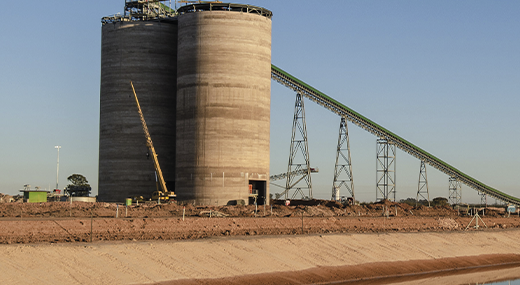
Our dams contain either clean or polluted water. Under South African dam safety legislation, a dam is classified as a safety risk if its wall height exceeds 5m and its storage capacity exceeds 50 000m³. Safety risk dams are assigned a category (I, II or III) based on their potential hazard, with category III indicating the highest risk level. The DWS determines these classifications.
Regular assessments, structural inspections and maintenance programmes are in place to ensure dam integrity and compliance with licence conditions. Emergency preparedness and response plans for the dams are in place and aligned with the NWA and regulations regarding the safety of dams, supported by DWS best practice guidelines. The plans are actively tested to ensure they are fit for purpose.
Our dams with safety risk classifications are as follows:
| Category I | Category II | |
| Grootegeluk | – | Cyclic ponds |
| Tshikondeni | Unwa Dam | – |
| Leeuwpan | – | Witklip Dam |
| Matla | – | Brine ponds |
| Durnacol | Durnacol Dam No 4 | Durnacol Dam No 7 Langley Dam No 2 Langley Dam No 3 |
Exxaro has no category III dams.
We explore and implement innovative solutions that improve water management across our operations.
At Grootegeluk, a recycling project involving a desilting plant, upgraded channels and the refurbished Oliphantskop Dam increases water reuse within beneficiation processes, reducing the volume of water lost to the pit and supporting long-term water security. Approval for expanding the storage capacity will allow further development of an additional buffer dam to further enhance process water recovery for reuse.
We use internal shadow pricing to support water-related planning and decision making. The shadow price reflects the minimum cost of producing water from alternative sources such as reverse osmosis and is adjusted using the Aqueduct Water Risk Atlas to account for physical, chemical and regulatory risks at each location. This approach helps assess the true cost of water and guides more resilient operational and capital planning.
Engagements with local water boards, municipalities and communities support shared water planning, infrastructure maintenance and responsible resource use. These partnerships ensure that operational water decisions align with regional priorities and community needs.
Exxaro also participates in industry forums and regulatory engagements to contribute to national water stewardship efforts.
Through the Coaltech research initiative, we work with other mining companies and academic institutions on projects that strengthen mine water management practices, inform mine closure planning and guide appropriate final land use.
At our Belfast operation, we were able to switch off the reverse osmosis plant in 2025 as we recycled all stored water either from pollution control facilities or mining voids. This enabled us to start the wet season at the end of 2025 with sufficient storage to allow for capturing all polluted runoff with minimal risk of spillage and keep our mining areas dry for safety purposes.
We will proactively manage our storage facilities and reduce any pressure on the system with the reverse osmosis plant on site.
We also investigated back-up supply through geophysical target areas and potential borehole abstraction should a drought event materialise.
Total water consumption (water withdrawals less water discharged) increased by 3.6%. The deterioration was mainly attributed to a lower recycling achieved in 2025.
| Consumption (ML) | 2025 | 2024 | 2023 | |
| Total water withdrawal | 10 385 | 10 342 | 8 744 | |
| Surface water | 7 825 | 7 776 | 5 834 | |
| Groundwater | 1 051 | 1 149 | 1 487 | |
| Third-party water | 1 509 | 1 417 | 1 423 | |
| Total water discharged | (737) | (1 033) | (1 314) | |
| Surface water | (737) | (1 033) | (1 314) | |
| Total water consumption | 9 648 | 9 309 | 7 430 |
Our water recycling decreased this year by 6%, with an overall recycling ratio of 44% (2024: 50%). The lower performance is attributed to flooding conditions during the first quarter of 2025 at Grootegeluk.
| Recycling ratio (%) | Target | 2025 | 2024 | 2023 | |
| Grootegeluk | 44 | 51 | 57 | ||
| Belfast | 26 | 40 | 62 | ||
| Leeuwpan (estimated) | 30 | 30 | 30 | ||
| Matla | 44 | 46 | 51 | ||
| Total group | 38 | 44 | 50 | 56 |
Our water recycling target (defined as the total water recycled divided by total water used including recycled water) is substantially higher than the coal industry average of 6%, as outlined in the national water use efficiency benchmarks of the DWS.
Our water intensity deteriorated by 1.9% (2024: -35%) to 145L/t RoM due to conditions mentioned above.
In 2025, we further lowered our water intensity target to 175L/t RoM from 180L/t RoM in 2024. Although our water intensity target is well below the coal industry average of 380L/t RoM, it aligns with our site-specific norms and supports our strategy to reduce water intake and increase water conservation and reclamation.
| Water intensity (L/t) | Water consumption (m3) | ||||||||
| Target (L/t) | 2025 | 2024 | 2023 | 2025 | 2024 | 2023 | |||
| Limpopo | |||||||||
| Grootegeluk | 170 | 154 | 146 | 104 | 7 979 374 | 7 524 410 | 5 802 577 | ||
| Tshikondeni | 70 800kL | n/a | n/a | n/a | 57 693 | 83 736 | 71 295 | ||
| Mpumalanga | |||||||||
| Belfast | 210 | 93 | 143 | 54 | 376 037 | 560 024 | 170 324 | ||
| Leeuwpan | 55 | 54 | 36 | 29 | 202 634 | 138 221 | 140 051 | ||
| Matla | 210 | 155 | 169 | 206 | 1 021 845 | 991 015 | 1 235 167 | ||
| Gauteng | |||||||||
| FerroAlloys | 15 000kL | n/a | n/a | n/a | 9 860 | 10 567 | 9 841 | ||
| KwaZulu-Natal | |||||||||
| Hlobane | 390kL | n/a | n/a | n/a | 248 | 291 | 408 | ||
| Total group | 175 | 145 | 142 | 105 | 9 647 691 | 9 308 265 | 7 429 662 | ||
Following a 2024 water security study, which assessed climate‑related risks to water supply and quality at each operation, we appointed EY to develop an adaptation strategy for the group that is expected to be completed in 2026.
These measures are designed to strengthen resilience, safeguard infrastructure and protect catchment health under changing climatic conditions.
Potential first phase objectives identified to improve resilience include:

2026
key actions